
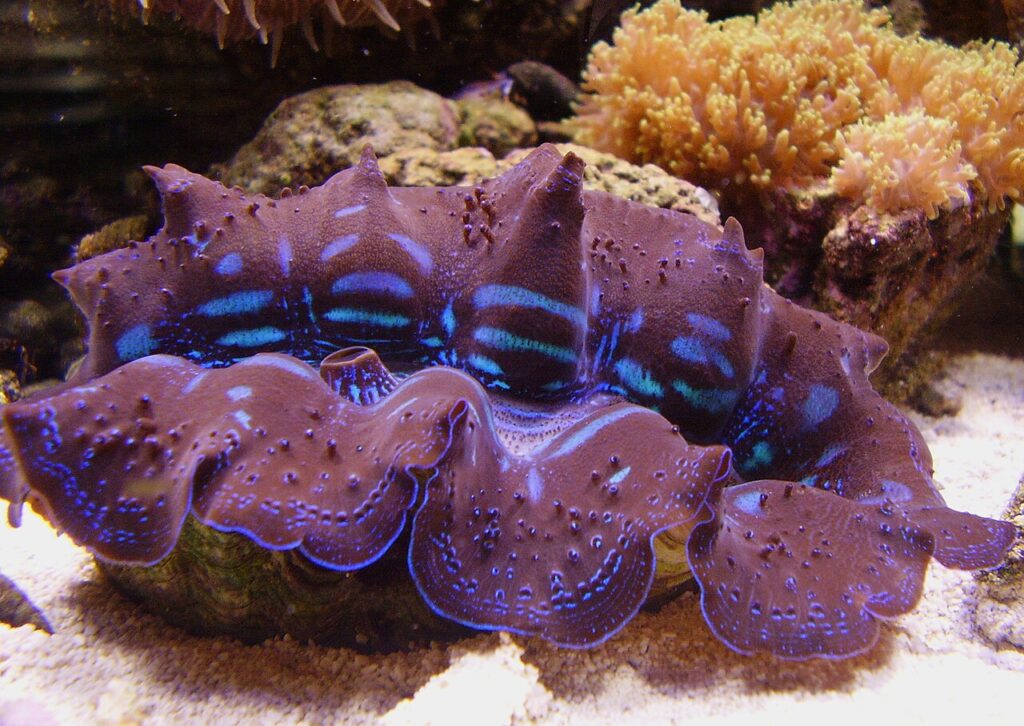
Maxima clam care comes down to three things: strong, stable light, rock-steady water chemistry, and a safe spot where the clam never has to be moved. The clam gets most of its food from symbiotic algae in its mantle, so it is more like a coral than a filter feeder. Give it a mature reef tank, good light and stable calcium, alkalinity and salinity, and it can live for decades.
People search "maxima clam care," "giant clam lighting," "are maxima clams hard to keep," and "maxima clam not fully opening." All are covered here.
Overview and Appearance
The maxima clam (Tridacna maxima), also called the small giant clam, is found across the Indo-Pacific. The shell has prominent furrows, and the exposed mantle comes in brilliant blue, green, purple, gold and brown patterns. The color comes from crystalline pigment cells that are thought to protect the clam from intense sunlight or to bundle light for the algae. It is one of the most popular clams in the reef hobby, and most clams sold today are aquacultured.
Size and Lifespan
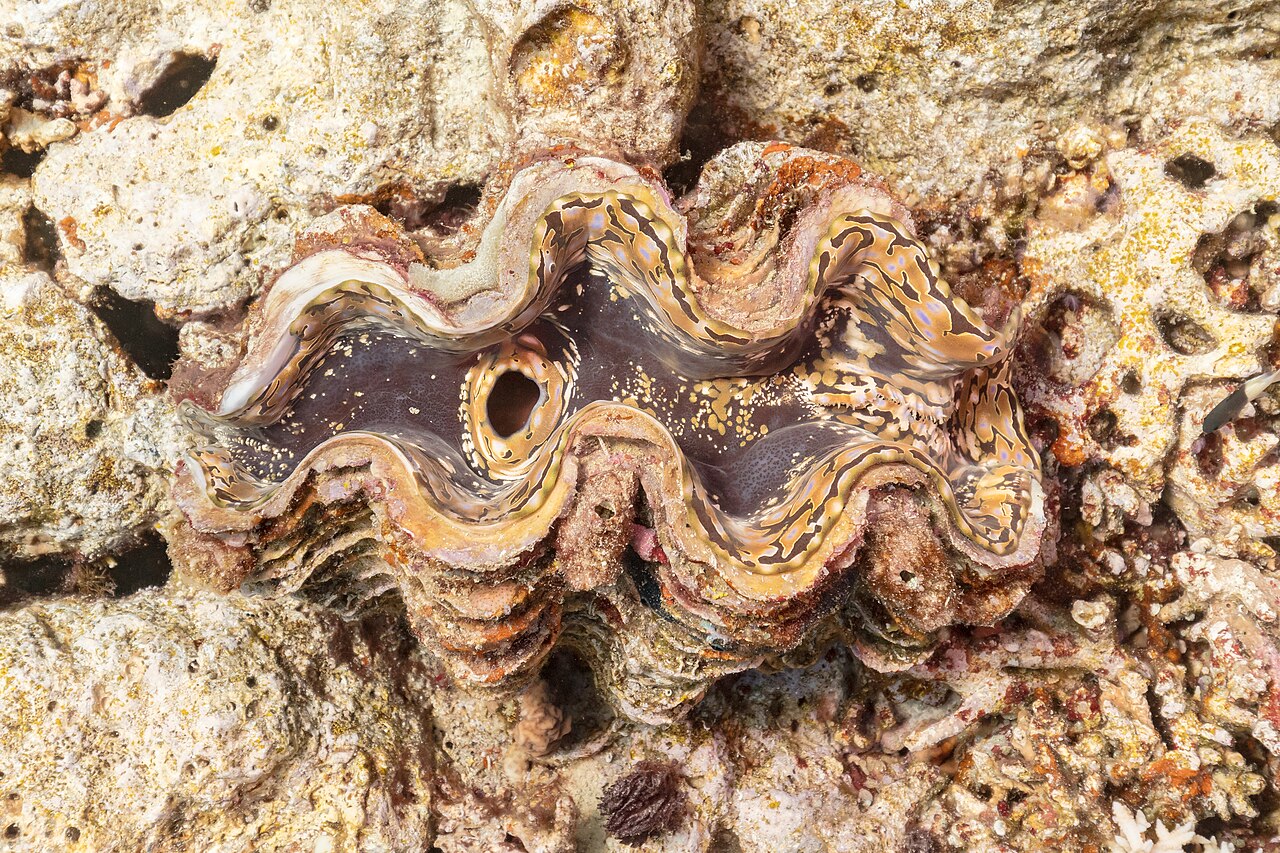
Maximas stay small compared with other giant clams. The shell of a large adult typically does not exceed about 20 cm (8 in), under a third the size of the true giant clam (Tridacna gigas). They can live for many years, and the hobby commonly describes lifespans of decades if conditions are stable. Growth is slow in dim or unstable tanks.
Tank Size and Setup
- Tank size. A mature 30 to 40 gallon tank is a reasonable minimum for a single small maxima. Bigger tanks are easier because water chemistry is more stable.
- Maturity. Wait until the tank has been running for at least several months. Giant clams are sensitive to swings in chemistry.
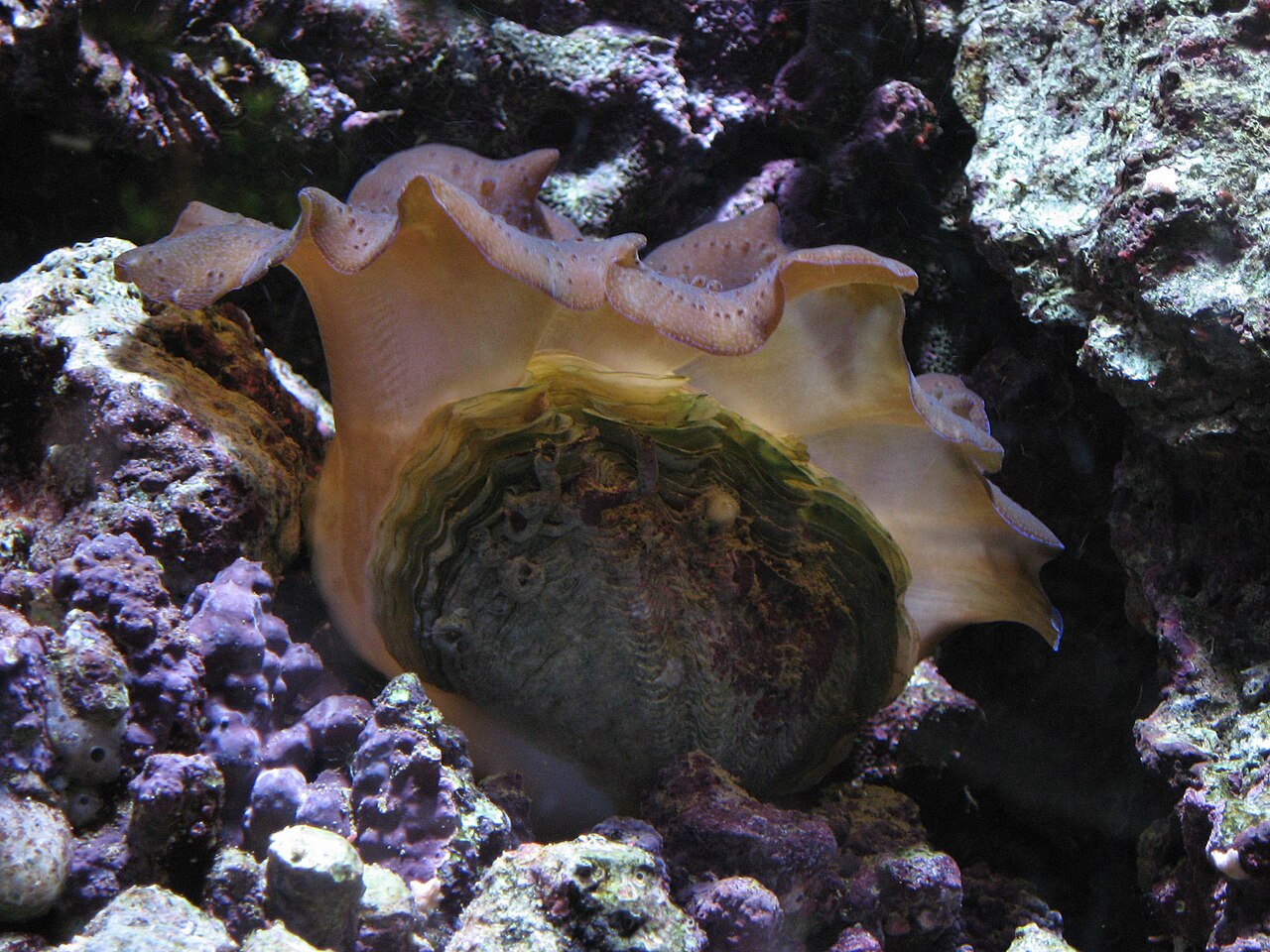
- Placement. Put the clam on a flat rock or the sand where it will stay. It attaches to rock with a tuft of byssal threads, so moving it later can injure it. Keep the shell edges clear and the mantle able to open, and leave it out of reach of coral that stings or grows over it.
- Flow. Moderate flow keeps the mantle clean without blowing the clam over.
See our saltwater aquarium setup guide for the basics.
Lighting
Lighting is where most clams fail. Because the clam depends on photosynthesis, it needs a strong reef-grade light, with LEDs, T5s or metal halides all possible. Light needs vary by species and depth: maximas generally need strong light, and crocea clams need even more. Hobby guides often cite light levels from about the 150 to over 300 PAR range at the clam, but exact numbers vary by source.
Acclimate a new clam slowly. Put it low in the tank under shading for the first week or two, then raise it in steps. A PAR meter or a quality reef light helps avoid bleaching from too much light too soon.
Just a heads up: some of the links in this post are affiliate links, which means I may earn a small commission if you buy through them. But no worries, it is at no extra cost to you. Also, as an Amazon Associate I earn from qualifying purchases.
Water Parameters
Typical reef targets that clam keepers follow:
- Temperature: about 77 to 80 F
- Salinity: about 1.025 to 1.026
- pH: about 8.1 to 8.4
- Alkalinity: about 8 to 11 dKH, kept stable
- Calcium: about 400 to 450 ppm
- Magnesium: about 1250 to 1350 ppm
- Nitrate and phosphate: low but not at zero
Stability matters more than any single number. Use a reef test kit and a calcium and alkalinity supplement, and dose slowly. Avoid sudden changes.
Diet and Feeding
Most of a maxima's nutrition comes from the zooxanthellae algae living in its mantle. It also filters phytoplankton from the water, but it does not need to filter-feed as much as other clams. In a well-lit reef you don't need to feed it directly. Some keepers add a bit of phytoplankton or reef food to the tank, but do it sparingly so you don't raise nutrients.
Temperament and Tank Mates
Clams are peaceful and sessile, but the tank mates matter a lot.
- Good tank mates: most peaceful reef fish and corals that don't sting or shade the clam, such as the fish in our royal gramma and green chromis guides.
- Risky tank mates: large crabs, some wrasses, triggerfish and some butterflyfish can pick at the mantle. See copperband butterflyfish for an example of a fish that needs careful reef matching.
- Corals: peaceful softies are fine. Avoid placing aggressive or stinging corals nearby. See hammer coral care for sweeper tentacle risks.
Breeding
Maxima clams are hermaphrodites: they mature as males after two or three years, then become hermaphrodites at about 15 cm. Spawning is triggered by lunar cycles and the presence of eggs and sperm in the water. Home spawning can happen, but successful rearing at home is rare. Most clams are produced by commercial aquaculture.
Common Health Issues
- Pyramid snails (pyramidellids). Tiny parasitic snails that suck fluids from the clam. Inspect the shell and mantle edges, and quarantine new clams.
- Bleaching. A pale mantle usually points to too much light too fast, heat, or poor water quality.
- Not opening or a receding mantle. See the FAQ below.
- Chemical stress. Copper, some medications, and rapid changes in alkalinity or salinity can harm a clam.
- Predation and nipping. Fish and crabs may harass the clam.
Similar stress signals show up in corals. Our coral not opening guide covers the broader water-quality checks.
Difficulty: Honest Rating
Intermediate to advanced. Giant clams are not delicate once settled, but they need a mature reef, serious lighting and stable chemistry. They are a good second or third step in the reef hobby, not a first animal. Buy aquacultured clams, and note that international trade of all giant clams is regulated under CITES.
Maxima Clam Care FAQ
Are maxima clams hard to keep?
They are moderate to difficult. Light, stable alkalinity and calcium, and slow acclimation are the key.
Why is my maxima clam not fully opening?
Common causes are stress from moving it, too much or too little light, parasitic pyramid snails, harassment from fish or crabs, or unstable water chemistry. Check your parameters and inspect the shell.
How big do maxima clams get?
Large adults usually reach no more than about 20 cm (8 in).
Do maxima clams need to be fed?
Usually not. They get most of their food from algae in the mantle.
What light do maxima clams need?
Strong reef lighting, typically LED or T5, with slow acclimation. Hobby ranges vary by species and tank.
Can I keep a maxima clam in a small tank?
A mature 30 to 40 gallon is a common minimum, but more water volume makes chemistry easier to keep stable.
What is the difference between maxima and crocea clams?
Crocea clams are smaller, bore into rock and generally need stronger light. Maximas are larger and are usually placed on a stable rock or sand.
How long do giant clams live?
Many years, often cited as decades, with stable conditions.
Final Thoughts
A healthy maxima clam is one of the most striking animals in a reef tank. Get your tank mature, give it strong light and stable chemistry, place it once, and let it settle. It will reward you for years.
Credit: Photos by Diego Delso (CC BY-SA 4.0), RevolverOcelot (CC BY-SA 3.0) and Liné1 (CC BY-SA 3.0) via Wikimedia Commons.
From Aquagram
Explore AquagramTest Account
Hello aquarists!
Dan GL
A view of my 125 gallon aquarium. Lots of fish and a few Northern Diamondback Terrapins too! 😁
SwitchTank
Incredible!
Sources and Fact Check
Reviewed November 23, 2026. Sources actually read:
- Wikipedia: Maxima clam (size under 20 cm, symbiotic zooxanthellae, byssus attachment, hermaphroditism at about 15 cm, CITES Appendix II).
Limitation: lighting (PAR) ranges, water-chemistry targets, tank size and lifespan are common hobbyist ranges that were not independently verified from reef-keeping or veterinary sources during research, and they vary by species and source.
Disclaimer: This article is general information, not veterinary advice. For serious or persistent problems, consult an aquatic veterinarian.