
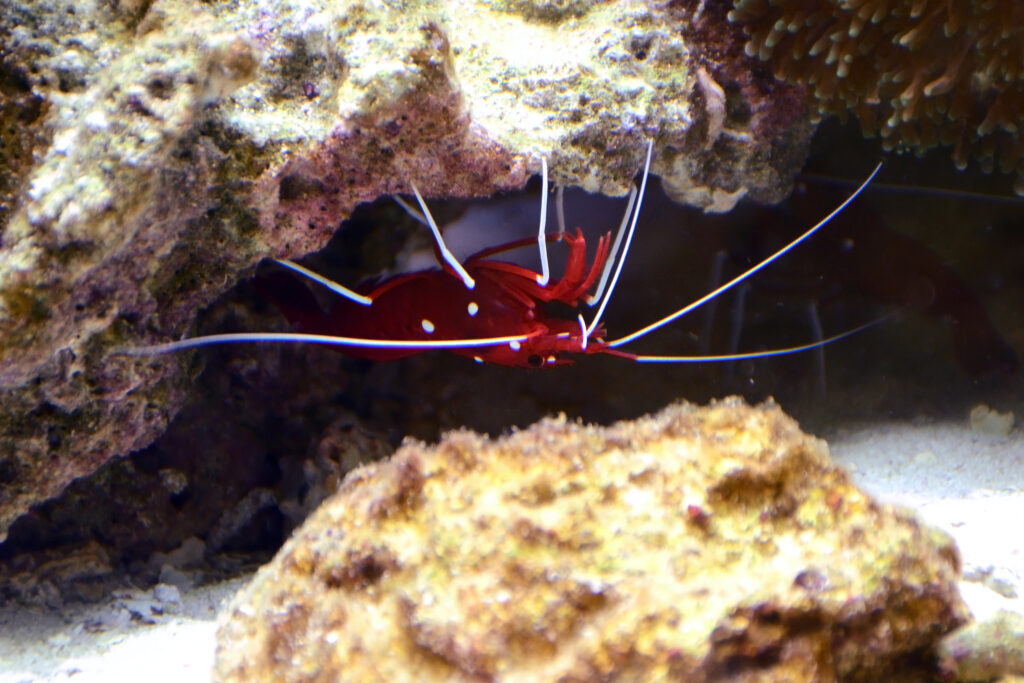
The blood red fire shrimp (Lysmata debelius) is one of the most striking invertebrates in the saltwater hobby: deep crimson with bright white spots and long white antennae. They are shy, reef-safe in most cases and fascinating to watch, but they are less forgiving than they look. This fire shrimp care guide covers everything from setup to molting.
Overview and Appearance
Fire shrimp, also called blood shrimp or scarlet cleaner shrimp, come from the Indo-Pacific. They are red with white spots on the tail and white legs and antennae. They are often sold as cleaner shrimp, although they clean fish less often than the cleaner shrimp with white stripes. They tend to hide in caves during the day and become more active at night, or when they feel secure.
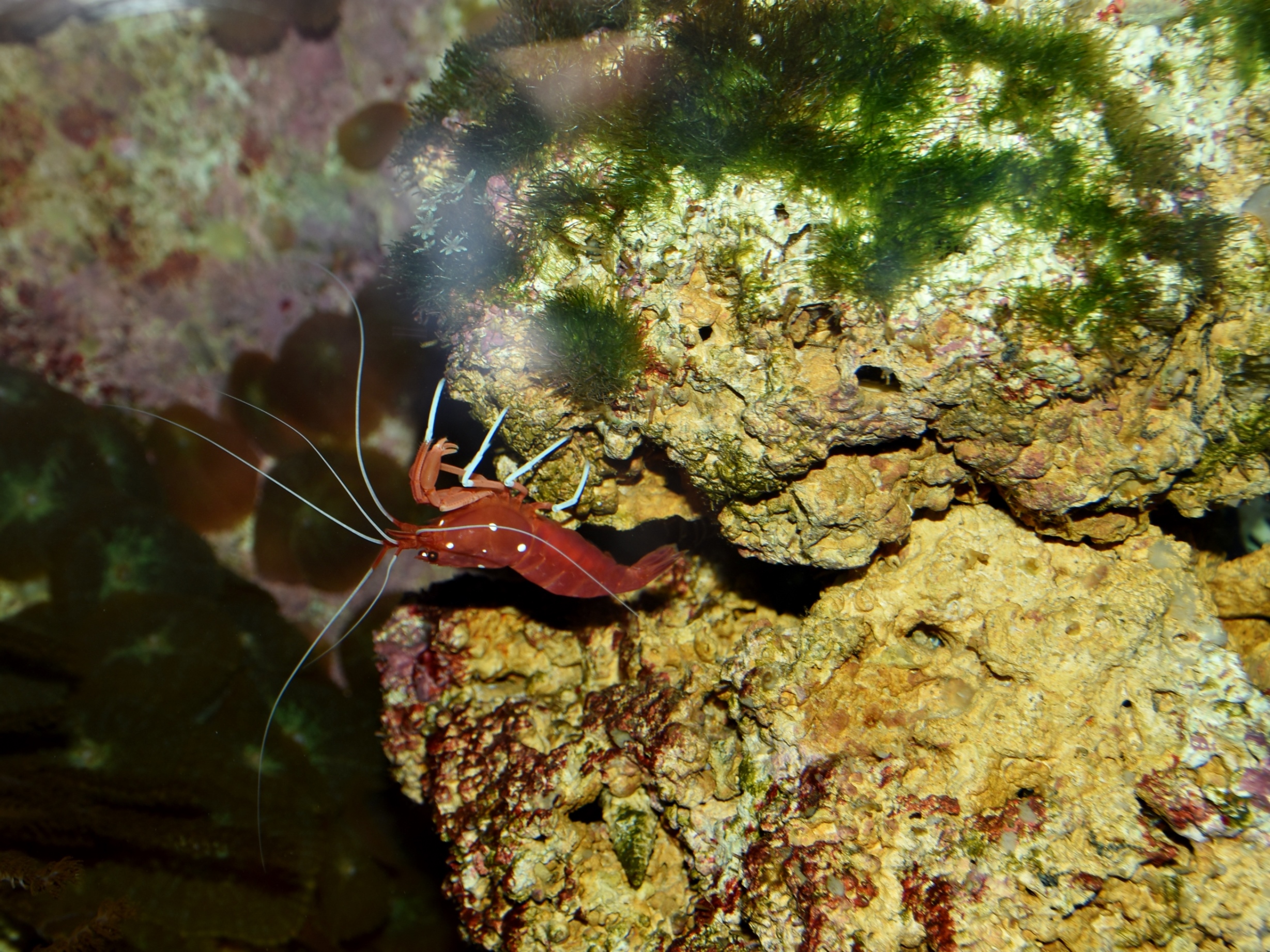
Photo: NasserHalaweh, Wikimedia Commons, CC BY-SA 4.0.
Size and Lifespan
- Size: about 2-3 inches
- Lifespan: 2-5 years in a stable tank
Tank Size and Setup
- Minimum tank: 20-30 gallons for one shrimp, larger for a pair or group
- Rockwork: plenty of caves and overhangs, since they hide often
- Sump or refugium: helpful for stable parameters
- Lighting: moderate, with shade provided by rock
Fire shrimp need a mature tank, so don't add one to a brand-new system. See our guide on how to set up a saltwater aquarium. A protein skimmer and a high-quality salt mix help keep conditions steady.
Just a heads up: some of the links in this post are affiliate links, which means I may earn a small commission if you buy through them. But no worries, it is at no extra cost to you. Also, as an Amazon Associate I earn from qualifying purchases.
Water Parameters
- Temperature: 72-78 F
- Salinity: 1.024-1.026 (specific gravity)
- pH: 8.1-8.4
- Ammonia/nitrite: 0 ppm
- Nitrate: below 20 ppm
- Calcium: 400-450 ppm
- Alkalinity: 8-11 dKH
Invertebrates are very sensitive to copper, which is in some fish medications, and to rapid salinity swings. Use a refractometer rather than a swing-arm hydrometer.
Acclimation
Drip acclimate over 1-2 hours. Fire shrimp are among the invertebrates most likely to die during poor acclimation and in unstable systems. Never use medications containing copper in the same system.
Diet
Fire shrimp are scavengers and omnivores.
- Frozen mysis shrimp
- Chopped seafood
- Quality marine pellets
- Flake foods
- Algae and detritus in the tank
Feed a few times a week, using a turkey baster or tongs to deliver food near their shelter. Shy shrimp can be outcompeted by fast fish.
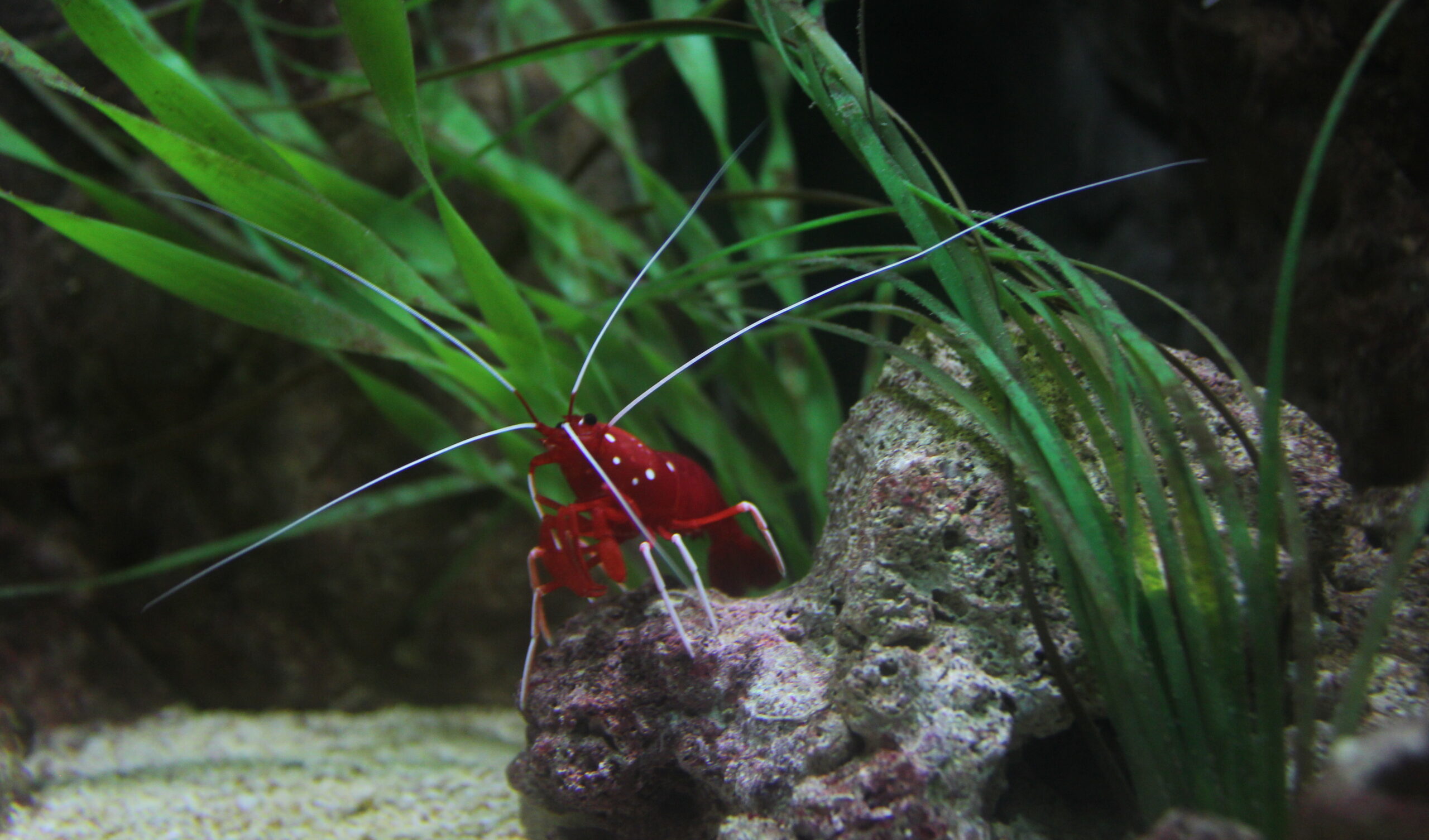
Photo: Tim Sheerman-Chase, Wikimedia Commons, CC BY 2.0.
Molting
Fire shrimp molt regularly, and a pale shell lying on the substrate is normal, not a dead shrimp. After molting they are soft and vulnerable, so leave them alone and don't remove the shell, as they often eat it to recover minerals. Stable calcium and iodine levels support healthy molts.
Temperament and Tank Mates
Fire shrimp are peaceful toward fish and corals, but in some cases may pick at small, slow or sleeping fish.
Good tank mates:
- Clownfish, gobies, blennies and dottybacks (see royal gramma)
- Peaceful reef inhabitants
Be careful with:
- Large, predatory fish such as triggers, groupers, lionfish and hawkfish, which will eat shrimp
- Mantis shrimp and large crabs
- Aggressive wrasses
- Pistol or harlequin shrimp, though harlequins are specialized. See our harlequin shrimp guide.
Keep one per tank unless it's a large aquarium. Fire shrimp can fight over territory, though some are kept in pairs or groups in larger systems.
Breeding
Fire shrimp can breed in aquariums but the larvae are planktonic and need very specialized care. Raising them is considered an advanced project, so for most hobbyists it's a bonus to simply see a female carrying eggs.
Buying Tips
- Buy from a store that keeps invertebrates in their own system, free of copper medications.
- Choose a shrimp with intact legs and both long antennae, with bright, even color.
- Ask how long it has been in the store. Shrimp held for a week or more have usually survived shipping well.
- Avoid shrimp that are lethargic, lying on their sides or very pale.
- Add the shrimp last, after any fish that need treatment have been dealt with, and turn off skimmers or powerheads briefly during acclimation if flow is strong.
Common Health Issues
- Failed molts: from unstable calcium, iodine or poor water
- Copper poisoning: from medication or contaminated equipment
- Stress or low-oxygen events: from heat spikes or ammonia
- Bacterial infections: darkened or damaged shells
- Predation: usually from large fish
Test regularly, perform weekly small water changes and quarantine new fish in a separate tank. Our quarantine tank setup guide explains how. If you have a serious problem, consult an experienced reef keeper or an aquatic veterinarian.
Difficulty Level
Moderate. Fire shrimp are not hard if the tank is stable and mature, but they are less tolerant than hardy freshwater species. The biggest risks are copper, salinity swings, poor acclimation and aggressive tank mates.
Fire Shrimp Care FAQ
Are fire shrimp reef safe?
Generally yes. They don't harm corals, though they may eat small invertebrates or tiny parasitic pests.
What size tank do fire shrimp need?
At least 20-30 gallons for one shrimp.
How long do fire shrimp live?
Typically 2-5 years.
What do fire shrimp eat?
Mysis, chopped seafood, pellets and algae, plus whatever they find in the rockwork.
Will fire shrimp clean fish?
They sometimes do, but not as reliably as the more common cleaner species.
Can I keep two fire shrimp together?
In a large tank, often yes. In smaller tanks, one is safer.
Why is my fire shrimp hiding all day?
This is normal, especially in bright tanks or with active tank mates. Provide more caves.
Can fire shrimp live with fish that eat shrimp?
No. Avoid large predators like triggerfish and lionfish.
Final Thoughts
A fire shrimp adds color, movement and personality to a saltwater tank. Keep the water stable, avoid copper, offer lots of hiding places and choose gentle tank mates, and this beautiful crustacean can be a long-lived centerpiece.
Disclaimer: This article is general information, not veterinary advice. For serious or persistent problems, consult an aquatic veterinarian.