
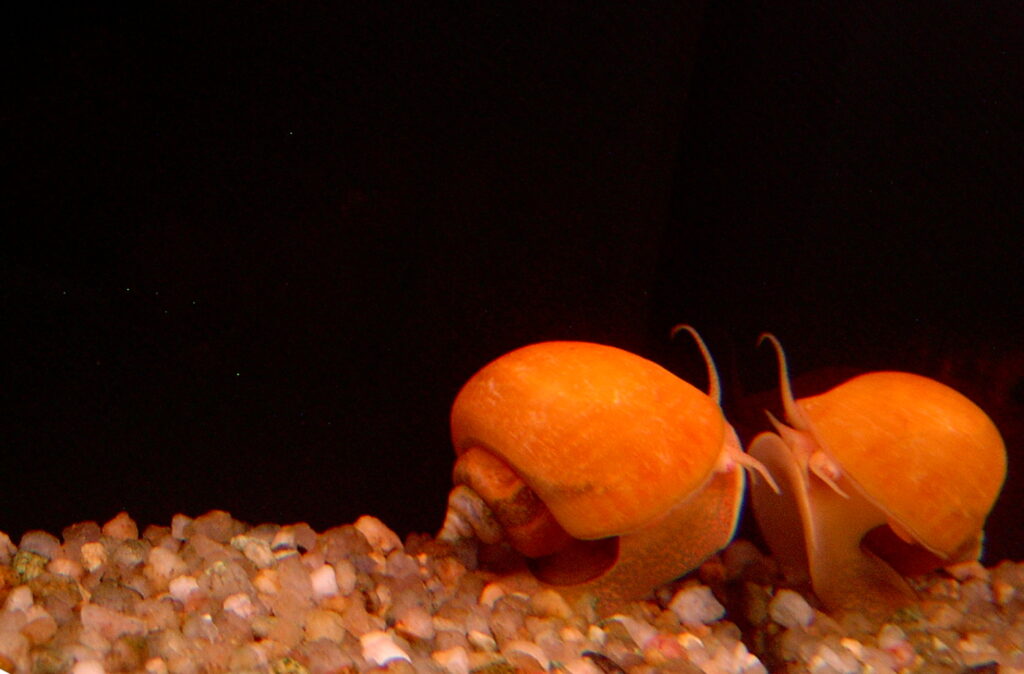
Mystery snails (Pomacea bridgesii) are big, colorful, peaceful freshwater snails that keep the tank clean and are fun to watch as they glide along glass, plants and substrate. They are also one of the most searched-for invertebrates in the hobby, and for good reason: they are charming, but they have specific needs that many keepers miss. This guide covers proper mystery snail care, from water hardness to the egg clutches that surprise new owners.
Overview and Appearance
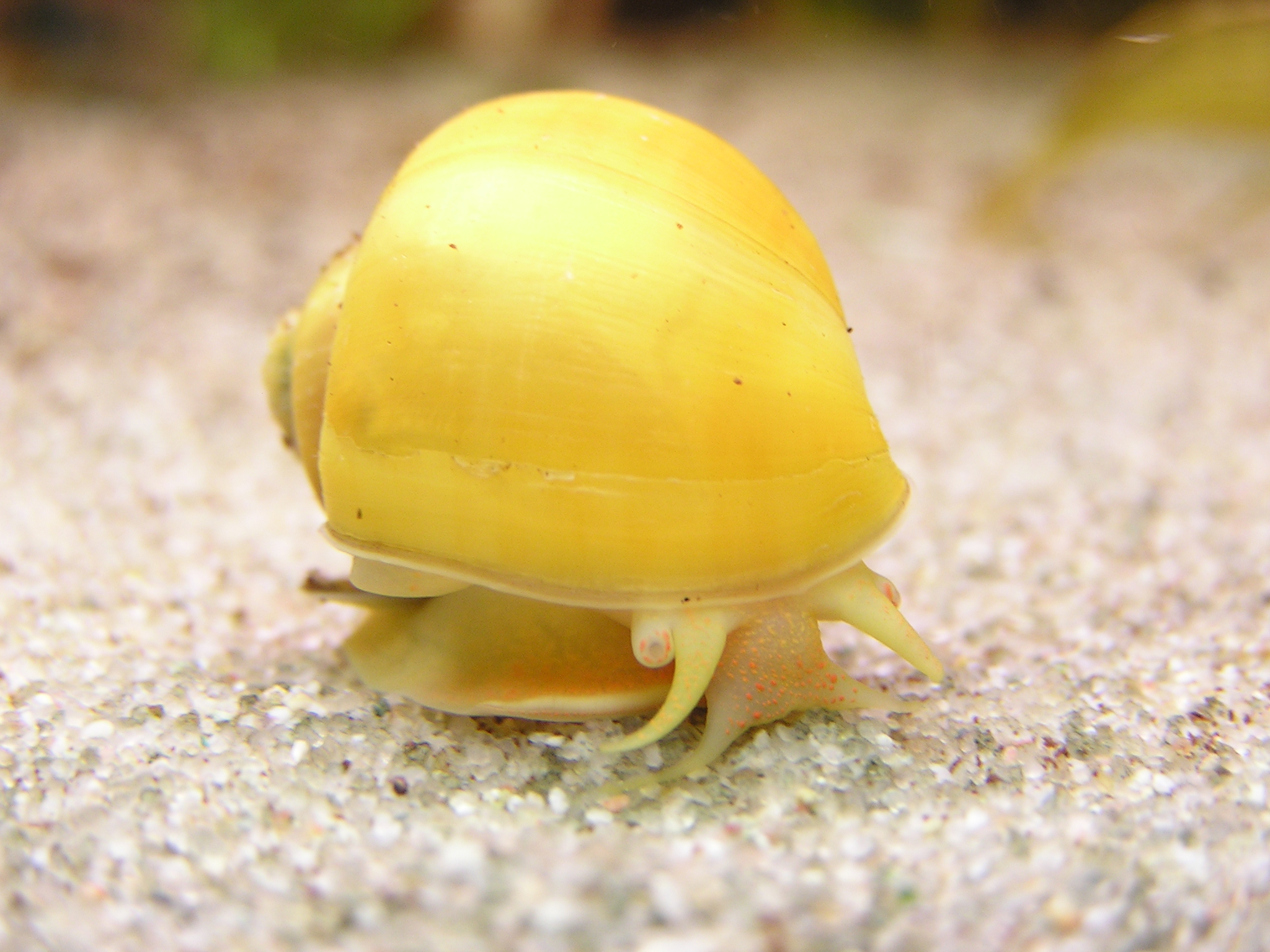
Mystery snails, also called apple snails, come in gold, ivory, blue, black, brown, purple and magenta. They have a rounded shell, long tentacles and a long breathing siphon they extend to the surface for air. They are a good fit for community tanks and are widely sold, but the name “mystery” really refers to how often their eggs appear without warning.
Size and Lifespan
Mystery snails grow to about 2 inches (5 cm) across the shell. They usually live 1-2 years, with some reaching 3 years in stable, warm and well-fed tanks. Because they are often sold already half grown, their remaining lifespan can be short, which is normal and not always a sign of poor care.
Tank Size and Setup
One snail can live in a 5-gallon tank, and a 10-gallon or larger is better, with roughly one snail per 5 gallons. They produce a lot of waste for their size, so do not overcrowd.
- Lid with a gap: They breathe air and may climb out, so keep the lid on but leave a small gap or breathing space. Leave some air space between the water and lid.
- Smooth substrate: Fine gravel or sand protects their soft bodies.
- Filter intake: Cover with a sponge or pre-filter sponge so snails do not get stuck.
- Plants and driftwood: Live plants give them places to graze.
Just a heads up: some of the links in this post are affiliate links, which means I may earn a small commission if you buy through them. But no worries, it is at no extra cost to you. Also, as an Amazon Associate I earn from qualifying purchases.
Water Parameters
- Temperature: 68-82°F (20-28°C). Warmer water speeds up their metabolism and shortens their lives, while cooler water slows them down.
- pH: 7.2-8.0
- Hardness (GH/KH): Medium to hard. Aim for GH above 8 dH and KH above 4 dH.
- Ammonia and nitrite: 0 ppm
- Nitrate: Under 40 ppm
Mystery snails need calcium to build their shell. Soft, acidic water dissolves shells and makes them thin and pitted. If your tap water is soft, add a calcium supplement or crushed coral in a mesh bag or filter. Test with a freshwater master test kit, plus a GH/KH kit.
Always use water treated with a water conditioner. Copper is deadly to snails, so avoid copper-based fish medications. This includes some ich treatments and many algae products. Check labels carefully, and see our top 5 aquarium medications before treating a tank with snails.
Diet
Mystery snails are scavengers, not just algae eaters. They will eat algae and biofilm, but they should not rely on algae alone.
- Sinking pellets and wafers: A quality algae wafer or snail food a few times a week.
- Blanched vegetables: Zucchini, cucumber, spinach and kale, softened and weighed down.
- Calcium sources: Cuttlebone or calcium-rich snail food for shell health.
- Leftovers: They eat uneaten fish food and dead plant leaves.
Remove uneaten vegetables after a day to avoid fouling the water.
Temperament and Tank Mates
Mystery snails are peaceful. They do not eat healthy plants in most cases, though they may nibble on soft or dying leaves.
- Good tank mates: Small peaceful fish such as tetras, rasboras, guppies, corydoras and kuhli loaches, plus shrimp like cherry shrimp.
- Use caution with: Bettas. Many bettas leave them alone, but some nip their tentacles. See our betta fish care guide.
- Avoid: Assassin snails, crayfish, pufferfish, loaches that eat snails (like clown and yoyo loaches), cichlids and large predators.
Breeding and Eggs
Mystery snails are not hermaphrodites, so you need a male and a female to breed. The female lays a pinkish or white egg clutch above the waterline, usually on the lid or glass. Eggs hatch in 2-4 weeks, and tiny snails drop into the water. Keep humidity high by leaving a small gap under the lid.
- Do not submerge the eggs. They need air to develop.
- To prevent a boom: Gently remove the clutch and discard it, or freeze it.
- To raise the babies: Provide fine food such as crushed algae wafers and powdered fish food, and keep the water hard enough for shells.
Why Is My Mystery Snail Dying, Not Moving or Floating?
This is one of the most common reasons people look up mystery snail care. A snail that does not move for a day or two is not always dead, so check before removing it.
- Float test: Floating can mean trapped air, not death. It may sink again after a day.
- Smell test: Gently pick it up and smell it. A dead snail has a strong, unmistakable rotting smell. A living one does not.
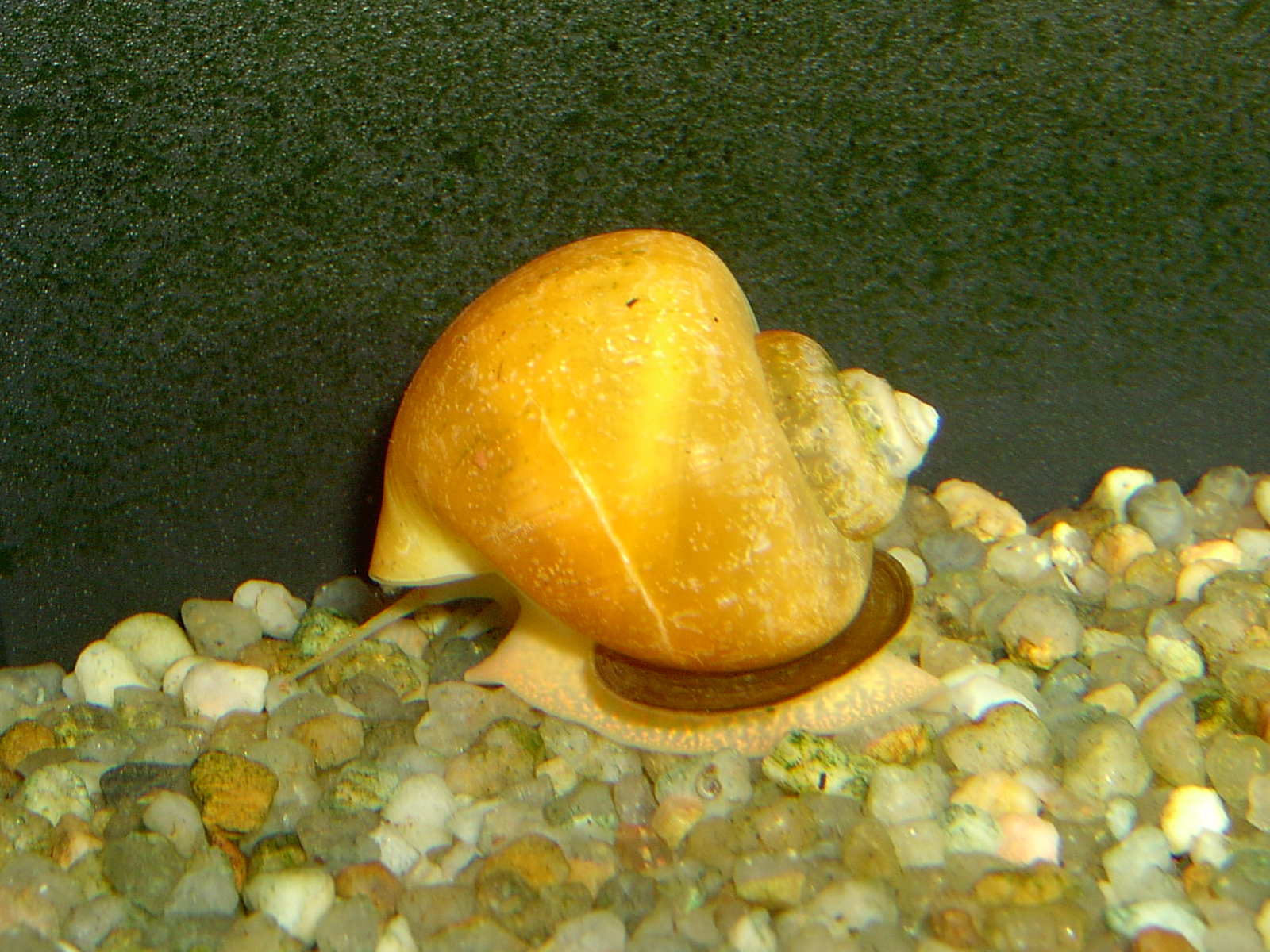
- Check the trapdoor: If the operculum (trapdoor) is closed tight, it may be alive and stressed. A hanging, limp body with an open shell is a bad sign.
- Common causes: Copper in medications or tap water, ammonia or nitrite, sudden temperature or water changes, water that is too soft, and old age.
If the snail is alive, do a partial water change, test your water, and keep the tank quiet. Remove a dead snail quickly, since it fouls the water fast.
Common Health Issues
- Shell erosion and thin shells: Usually soft or acidic water. Add calcium and raise hardness.
- Copper poisoning: Often from medications. Remove with fresh water and carbon.
- Starvation: Too little food in a very clean or small tank.
- Poor water quality: Ammonia and nitrite quickly harm snails. Learn how to cycle a fish tank first.
Quarantine new snails for a couple of weeks. They can carry pests and parasites.
Difficulty Level
Easy to moderate. Mystery snails are simple once you get water hardness, temperature and copper right, but they die quickly when these are off. They are a good first invertebrate if your tap water has some hardness.
Mystery Snail FAQ
How big do mystery snails get?
About 2 inches (5 cm).
How long do mystery snails live?
Usually 1-2 years, sometimes up to 3.
What do mystery snails eat?
Algae, sinking pellets, blanched vegetables and leftover food.
Can mystery snails live with bettas?
Often yes, but watch for tentacle nipping.
Do mystery snails need a heater?
Not necessarily, but stable temperatures help. A small heater is useful in cool rooms.
How do I stop mystery snails from breeding?
Keep only one snail or all of the same sex, or remove egg clutches.
Why is my mystery snail floating at the top of the tank?
Trapped air is common. If it stays up and the smell is bad, it has died.
Why is my mystery snail not moving?
It may be resting, stressed or dead. Check by smell and trapdoor before removing it.
Final Thoughts
Mystery snails are lovely, peaceful tank cleaners. Give them hard enough water, copper-free conditions, stable temperatures and proper food, and they will be a charming part of your freshwater tank.
Photo credits: Caracol de aquário tropical and Caracol de aquário tropical 2 by Rcfernandes, public domain; Pomacea bridgesii MdE 1 by MdE, CC BY-SA 3.0 de, via Wikimedia Commons.
Disclaimer: This article is general information, not veterinary advice. For serious or persistent problems, consult an aquatic veterinarian.