
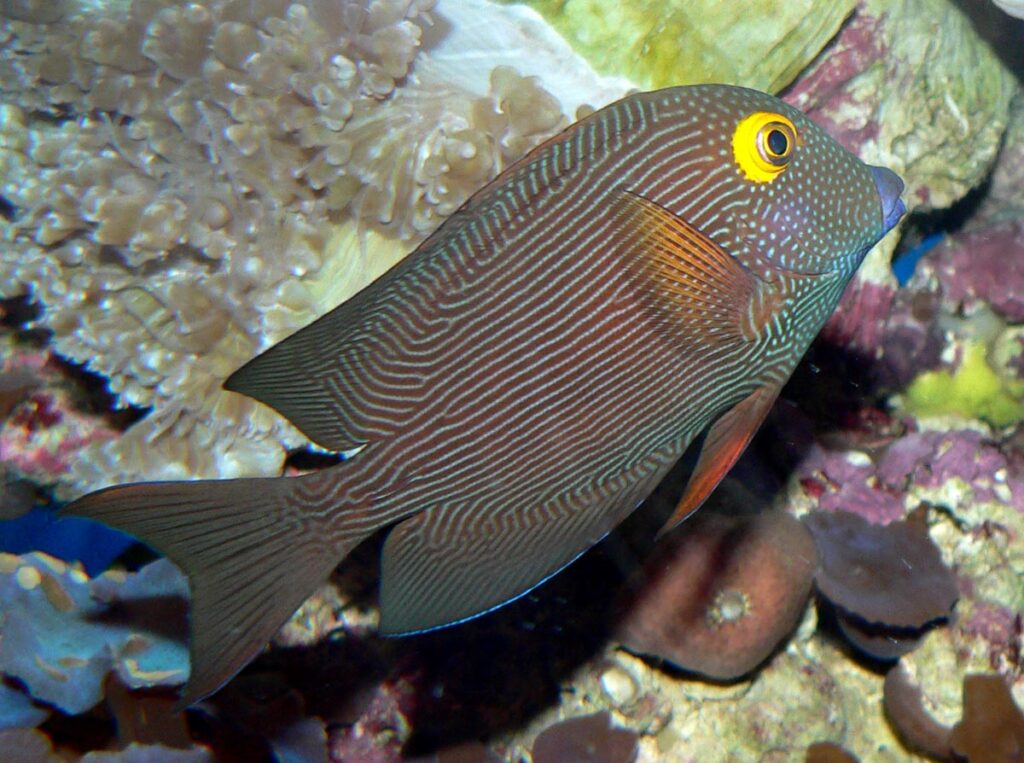
The kole tang (Ctenochaetus strigosus), also called the yellow-eyed kole tang or goldring bristletooth, is a favorite of reef keepers. It combines a handsome look with an excellent work ethic: it grazes film algae and detritus all day, and is among the few tangs that are generally safe with corals. It is not a beginner fish, though, so here is what proper kole tang care involves.
Overview and Appearance
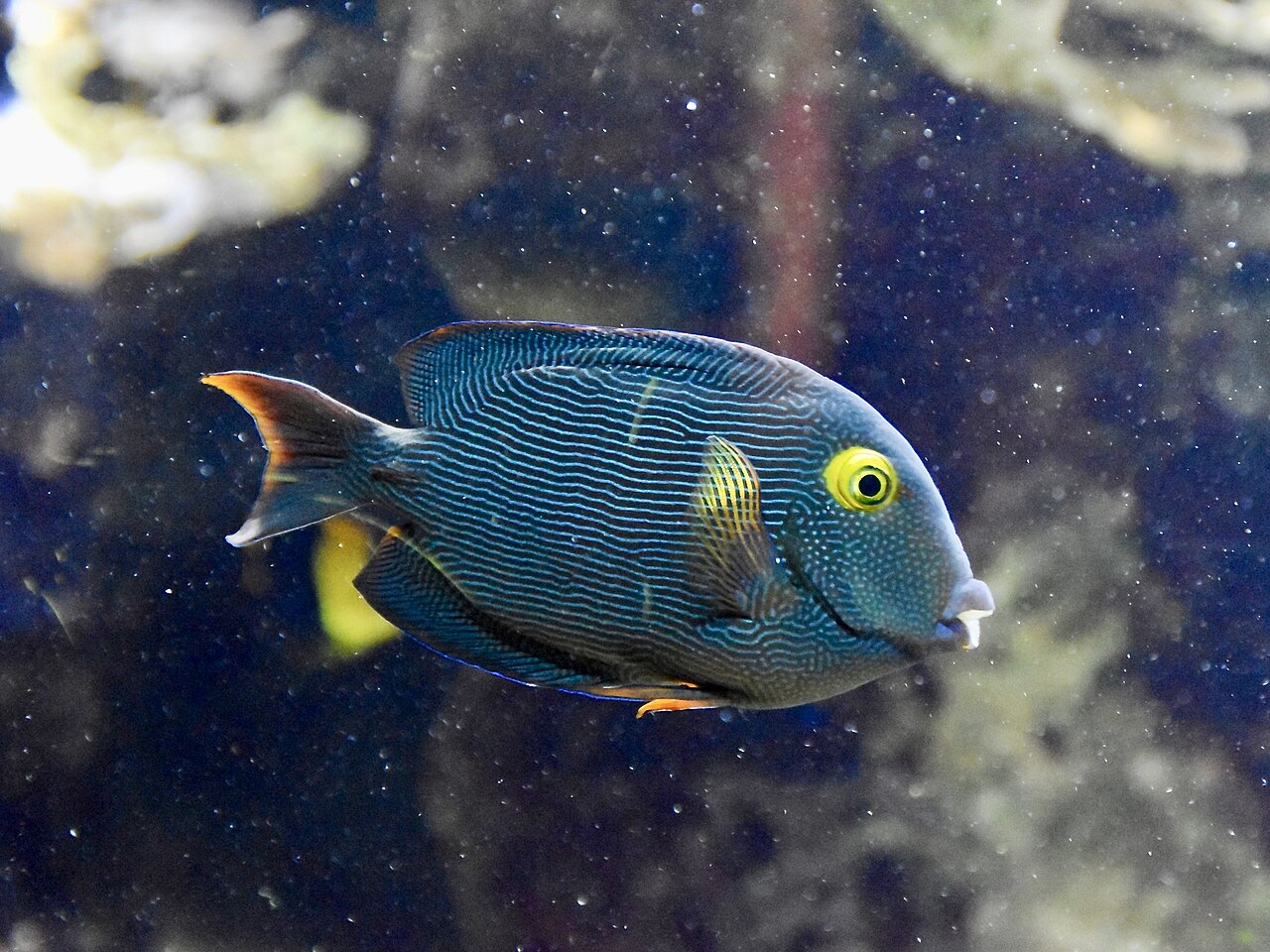
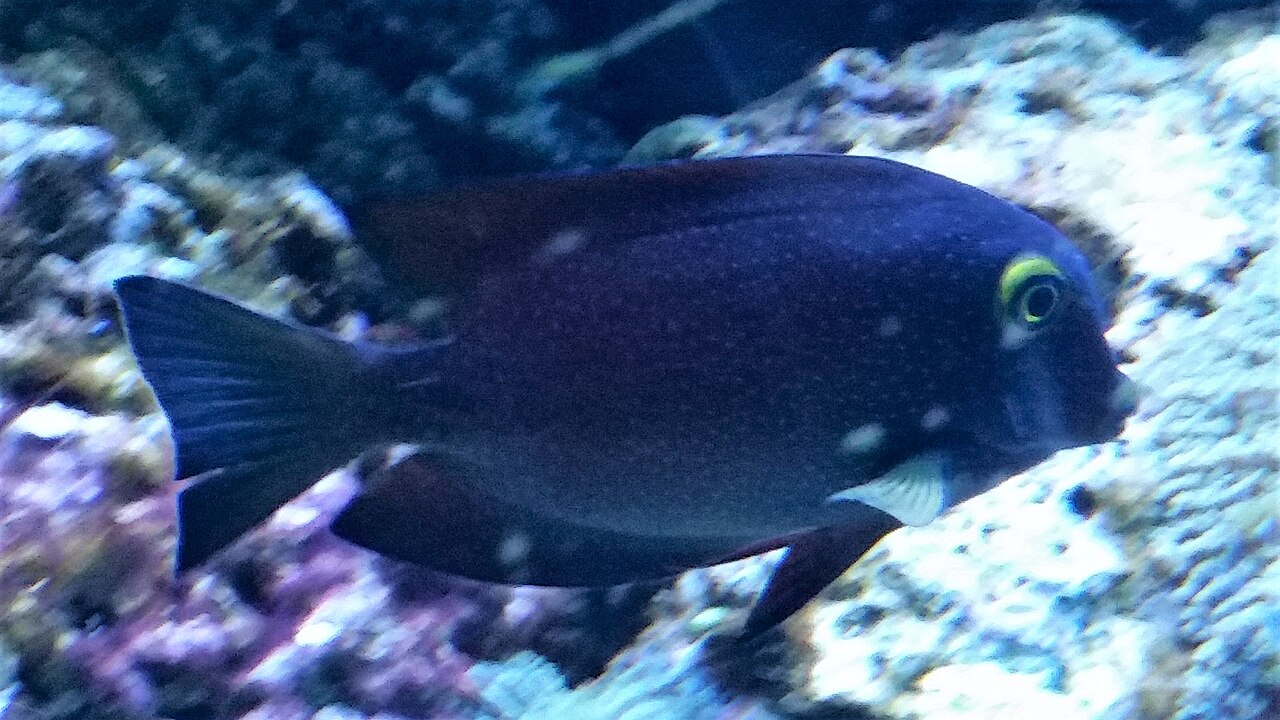
Kole tangs come from Hawaii and the central Pacific. Their dark brown to bronze body is covered with fine light blue lines, ending in an orange-tinted tail edge. The most striking feature is a golden ring around the eye. Instead of the typical tang teeth, they have fine bristle-like teeth ideal for combing algae and detritus off rock and sand.
Size and Lifespan
Kole tangs grow to about 7 inches (18 cm). With good care, they can live 10 years or more in captivity.
Tank Size and Setup
The most common recommendation is a minimum of 70 gallons, and bigger is better. Tangs are active swimmers that need horizontal swimming room, so a long tank (4 feet or more) is better than a tall one.
- Live rock: Mature live rock with plenty of grazing surface, and open swimming room.
- Flow: Moderate to strong flow with good oxygenation.
- Lid or tight cover: Tangs can jump.
- Mature tank: Add a kole tang only after the tank has grown a healthy layer of algae and film to graze on, usually 4-6 months after setup. See our saltwater aquarium setup guide.
Choosing and Acclimating a Kole Tang
Look for a fish with a rounded (not hollow) belly, clear eyes, intact fins and no white spots. Ask to see it eating nori or pellets before you buy. Wild-caught tangs can arrive stressed and thin, so insist on a fish that has been in the store for at least a week. At home, float the bag to equalize temperature, drip acclimate slowly because salinity differences stress tangs, and place the fish in quarantine before it ever touches the display. Keep lights low for the first day and offer nori right away.
Water Parameters
- Temperature: 76-80°F (24-27°C)
- Salinity: 1.023-1.025 specific gravity (about 33-35 ppt)
- pH: 8.1-8.4
- Ammonia and nitrite: 0 ppm
- Nitrate: Under 10-20 ppm preferred
Stable parameters matter more than perfect numbers. Test with a good saltwater test kit and measure salinity with a refractometer.
Just a heads up: some of the links in this post are affiliate links, which means I may earn a small commission if you buy through them. But no worries, it is at no extra cost to you. Also, as an Amazon Associate I earn from qualifying purchases.
Diet
Kole tangs are grazers and detritivores. They need lots of small meals, and the best way to provide this is:
- Dried seaweed (nori): Offered on a veggie clip daily.
- Marine algae pellets and flakes: Quality spirulina-based foods.
- Frozen herbivore blends: Mixed with mysis shrimp.
- Natural algae and film: Don’t clean every rock; leave some for grazing.
Variety and fresh algae support a strong immune system. Underfed tangs are far more likely to get sick, and they may develop head and lateral line erosion (HLLE) if the diet is poor.
Temperament and Tank Mates
Kole tangs are generally peaceful with other fish, but aggressive with their own kind and similar tangs.
- Don’t mix with other Ctenochaetus (bristletooth tangs) unless the tank is very large and added at the same time.
- Add other tangs carefully, with the least aggressive first. Compare with the yellow tang, purple tang and powder blue tang, which are much more aggressive.
- Good tank mates include clownfish (like the ocellaris), gobies, wrasses, firefish and royal grammas.
Kole tangs are reef safe and don’t bother corals or most invertebrates.
Breeding
Kole tangs are not bred in home aquariums. Nearly all fish in the hobby are wild caught, so reputable sourcing matters. Ask the store how long a fish has been eating before buying it.
Common Health Issues
- Marine ich (Cryptocaryon irritans): Tangs are notoriously prone to ich, especially after shipping and stress. White spots, rapid breathing and scratching are signs.
- Head and lateral line erosion: Linked to poor diet and water quality.
- Starvation: Wild-caught tangs may arrive thin and need help to start eating.
- Aggression injuries: From tank mates in small tanks.
Quarantine every new fish for at least 4 weeks in a proper QT. Our quarantine tank setup guide explains how, and the white spots guide helps with spot diagnosis.
How Difficult Is the Kole Tang?
Kole tangs are intermediate in difficulty. They are hardier than many tangs, and they eat readily once settled. But they need a large, mature, algae-rich tank, a quarantine period, and careful tank mate planning. If you want a tang that’s less aggressive than most, this is one of the best choices.
Kole Tang Quick Facts
- Scientific name: Ctenochaetus strigosus
- Origin: Hawaii and the central Pacific
- Adult size: About 7 inches
- Minimum tank: 70 gallons
- Temperature: 76-80°F
- Diet: Herbivore and detritivore grazer
- Reef safe: Yes
- Care level: Intermediate
Kole Tang FAQ
How big do kole tangs get?
About 7 inches.
What size tank does a kole tang need?
At least 70 gallons, though larger is better.
Are kole tangs reef safe?
Yes, generally. They graze algae and don’t eat corals.
What do kole tangs eat?
Algae, nori, spirulina-based foods and frozen herbivore mixes.
Can kole tangs live together?
Not usually. They are aggressive toward their own kind.
Can you keep a kole tang with other tangs?
Sometimes, in a large tank. Add the kole last or first, carefully, and avoid similar-shaped tangs.
How long do kole tangs live?
10 years or longer with good care.
Are kole tangs good algae eaters?
Yes, they are among the best at eating film algae and diatoms.
Final Thoughts
The kole tang is an excellent addition to a mature reef tank: attractive, useful and peaceful. Give it space, algae, variety and a quarantine period, and it will be a long-lived centerpiece.
Photo credits: Ctenochaetus strigosus 1 by Stan Shebs, CC BY-SA 3.0; Acanthuridae Ctenochaetus strigosus 1 by NasserHalaweh, CC BY-SA 4.0; Hal – Ctenochaetus strigosus – 1 by Emőke Dénes, CC BY-SA 4.0, via Wikimedia Commons.
Disclaimer: This article is general information, not veterinary advice. For serious or persistent problems, consult an aquatic veterinarian.