
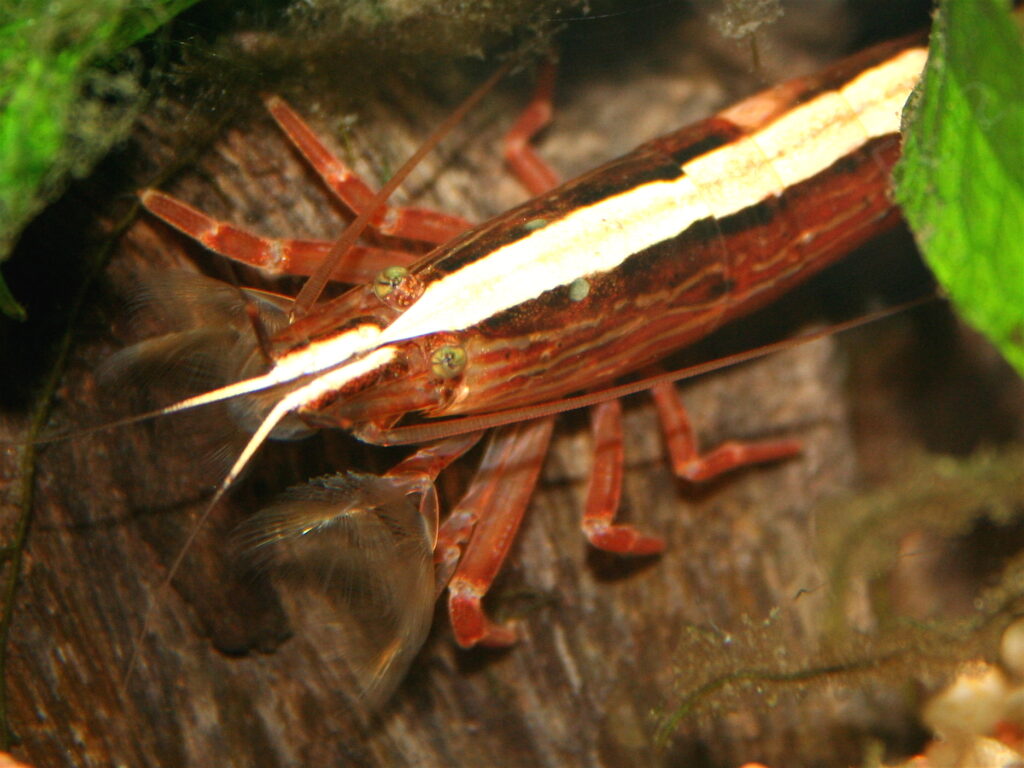
The bamboo shrimp (Atyopsis moluccensis), also sold as the wood shrimp, fan shrimp or Singapore flower shrimp, is one of the most fascinating freshwater invertebrates you can keep. Instead of grazing, it perches in the current and filters food from the water with feathery fans on its front legs. That unusual feeding style is also the reason many die: a bamboo shrimp needs a mature tank, steady flow and a regular supply of fine particles, or it slowly starves while looking fine for weeks.
This guide covers setup, feeding, water, tank mates and honest expectations.
Bamboo Shrimp Overview and Appearance
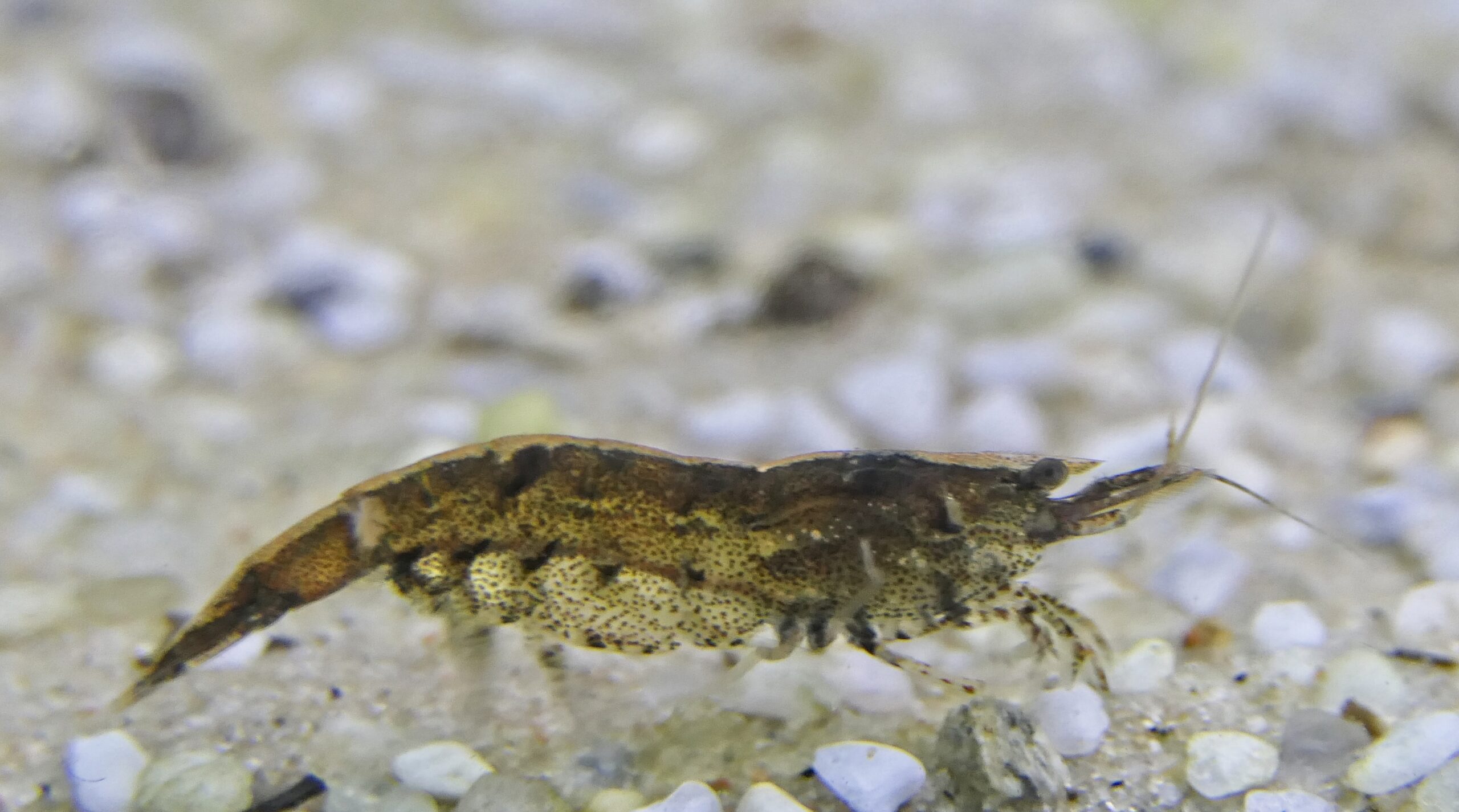
Bamboo shrimp come from streams and rivers in Southeast Asia and the surrounding islands. They are larger than a cherry or ghost shrimp and have a tan, brown, reddish or grey-green body, often with a pale stripe running down the back. Their feeding fans open like small combs in the current. Colors vary by mood, diet and the surroundings.
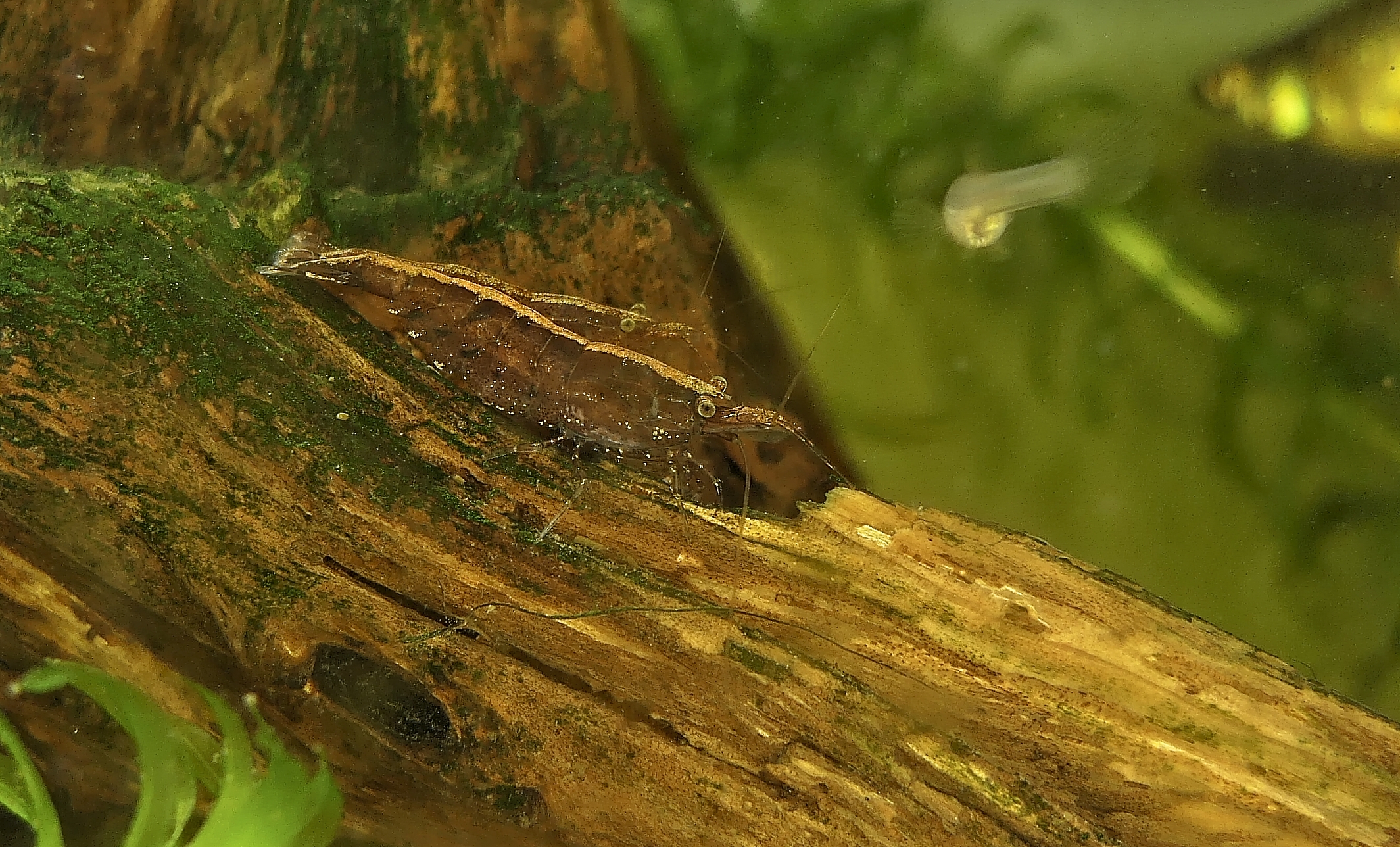
They are peaceful, slow-moving and spend most of the day perched on wood, rocks or near the filter outlet, fanning food out of the water.
Size and Lifespan
- Adult size: about 2.5-3.5 inches (6-9 cm), sometimes slightly larger
- Lifespan: about 2 years in many home tanks, occasionally longer in ideal setups
Tank Size and Setup
A single bamboo shrimp can live in a 20-gallon tank, but larger is better because of the amount of flow and mature surface area they like. Use a 30-gallon or larger tank if you want a group.
Key setup points:
- A mature tank. Do not add a bamboo shrimp to a tank cycled only a few weeks ago. Wait 3-6 months so the tank has biofilm, microfauna and a stable cycle. See our guide to cycling a fish tank.
- Water flow. They need moderate flow across wood or rock where they can perch. A filter outlet, spray bar or small powerhead helps; make sure the intake is covered with a sponge pre-filter so the shrimp are not sucked in. A sponge pre-filter also protects other shrimp.
- Hardscape. Driftwood, branches, smooth rocks and plants give lookout spots. Make sure they can reach the current.
- Substrate: sand or fine gravel, with leaf litter for biofilm.
- Lid. Shrimp can climb out through gaps.
- Plants: moss, floating plants, and Anubias or java fern add cover and biofilm.
Just a heads up: some of the links in this post are affiliate links, which means I may earn a small commission if you buy through them. But no worries, it is at no extra cost to you. Also, as an Amazon Associate I earn from qualifying purchases.
Water Parameters
- Temperature: 72-82°F (22-28°C), with 75-80°F a safe target
- pH: about 6.5-7.8
- GH: about 5-12 dGH, with enough minerals for healthy molting
- KH: about 2-8 dKH
- Ammonia and nitrite: 0 ppm
- Nitrate: under 20 ppm
Like all shrimp, they are very sensitive to copper, many fish medications and sudden changes. Acclimate slowly by drip, and always dechlorinate with a good water conditioner. If shrimp die after maintenance, see our guide to shrimp dying after a water change.
Diet and Feeding
This is the part most people get wrong. Bamboo shrimp are filter feeders. They catch microscopic organic particles, algae, biofilm and powdered food from the current. A clean, brand-new tank may simply not contain enough.
- Powdered foods: specialized filter feeder or shrimp powder food, spirulina powder, finely crushed flake, or powdered fry food
- Technique: mix a small amount of powder in a cup of tank water and release it near the shrimp or filter outlet so it drifts through the fans
- Frequency: 2-4 times a week in a mature tank, and more often in a very clean tank, adjusting to what the shrimp and fish actually eat
- Natural food: biofilm and mulm on wood and leaves, infusoria and fine detritus
- Do not overfeed. Uneaten powder fouls the water
A bamboo shrimp that is fanning actively and holding on firmly is getting fed. A shrimp that hangs lazily, wanders constantly on the glass, or looks thin may not be getting enough food. Competing fish can steal powdered food, so feed when fish are not hovering around the outlet.
Temperament and Tank Mates
Bamboo shrimp are peaceful and have no interest in other tank inhabitants. They are, however, slow and tend to become prey if kept with fish that can eat them.
Good tank mates:
- Small, peaceful fish such as rasboras, small tetras, otocinclus and kuhli loaches (see our kuhli loach care guide)
- Other peaceful shrimp such as amano shrimp, cherry shrimp and snails
Avoid:
- Large cichlids, goldfish, loaches big enough to catch them, bettas that hunt shrimp and other predatory fish
- Crayfish and large crabs
- Fish that harass fan-feeding shrimp
Because they are bigger than dwarf shrimp, they are not tiny snacks, but any fish with a large mouth is a risk.
Breeding
Bamboo shrimp are very hard to breed in home aquariums. Females carry eggs, but the larvae need brackish water to develop, with the freshwater adults living in rivers and the larvae drifting downstream to the sea in nature. A dedicated brackish larval setup is required, and few hobbyists succeed. Assume you will not breed them, and buy captive-collected or wild-caught animals from a reputable source.
Common Health Issues
- Slow starvation in new or too-clean tanks
- Failed molts from low minerals, poor water or stress
- Copper and medication poisoning, a common killer
- Poor water quality and ammonia
- Being eaten by fish
- Being sucked into a filter intake
- Sudden deaths after water changes or temperature swings. See our high ammonia guide if you suspect a water problem.
Shrimp often molt every few weeks; a pale ghost-like shell is normal. Leave it in the tank for the shrimp to recycle minerals.
Quarantine new shrimp where possible and do not use medications intended for fish in the main tank. See our quarantine tank setup guide, and consult an aquatic veterinarian for persistent issues.
Honest Difficulty Level
Intermediate. Bamboo shrimp are hardy once settled, but feeding them is trickier than for most shrimp. They are a good second-step invertebrate for keepers with a mature, stable tank, but a poor choice for a freshly set up nano tank.
Bamboo Shrimp FAQ
How big do bamboo shrimp get?
About 2.5-3.5 inches (6-9 cm).
How long do bamboo shrimp live?
Around 2 years, sometimes longer with excellent care.
What do bamboo shrimp eat?
Fine particles filtered from the water, including powdered shrimp or filter-feeder food, spirulina powder, algae and biofilm.
Why is my bamboo shrimp not eating or not fanning?
It may be new and stressed, in a tank with poor flow, or simply not getting enough particles. Increase flow near their perch and offer powdered food regularly.
Do bamboo shrimp need a lot of flow?
Moderate flow across their perch, not a violent current. They need food to be carried to them.
Can bamboo shrimp live with betta fish?
It is risky. Some bettas ignore them, but many will harass or hunt shrimp, so only try it in a large, well-planted tank and be ready to separate.
Can bamboo shrimp live in a new tank?
It is not recommended. Wait for a mature, cycled tank with a few months of biofilm and stable parameters.
Can I keep just one bamboo shrimp?
Yes. They are not strongly social, but a small group can work in a larger tank.
Do bamboo shrimp breed in freshwater?
Not successfully. Larvae need brackish water, so breeding is rare in home tanks.
Final Thoughts
Bamboo shrimp are calm and fun to watch, but they need patience and the right setup. Give them a mature tank, steady flow, a well-fed environment and peaceful companions, and they will reward you with some of the most interesting behavior in the freshwater hobby.
Photo credits: Bambooshrimpdriftwd by Faucon, CC BY-SA 2.5; Atyopsis moluccensis – Molukken-Fächergarnele (2) and – subadult by 5snake5, CC0, via Wikimedia Commons.
Disclaimer: This article is general information, not veterinary advice. For serious or persistent problems, consult an aquatic veterinarian.