
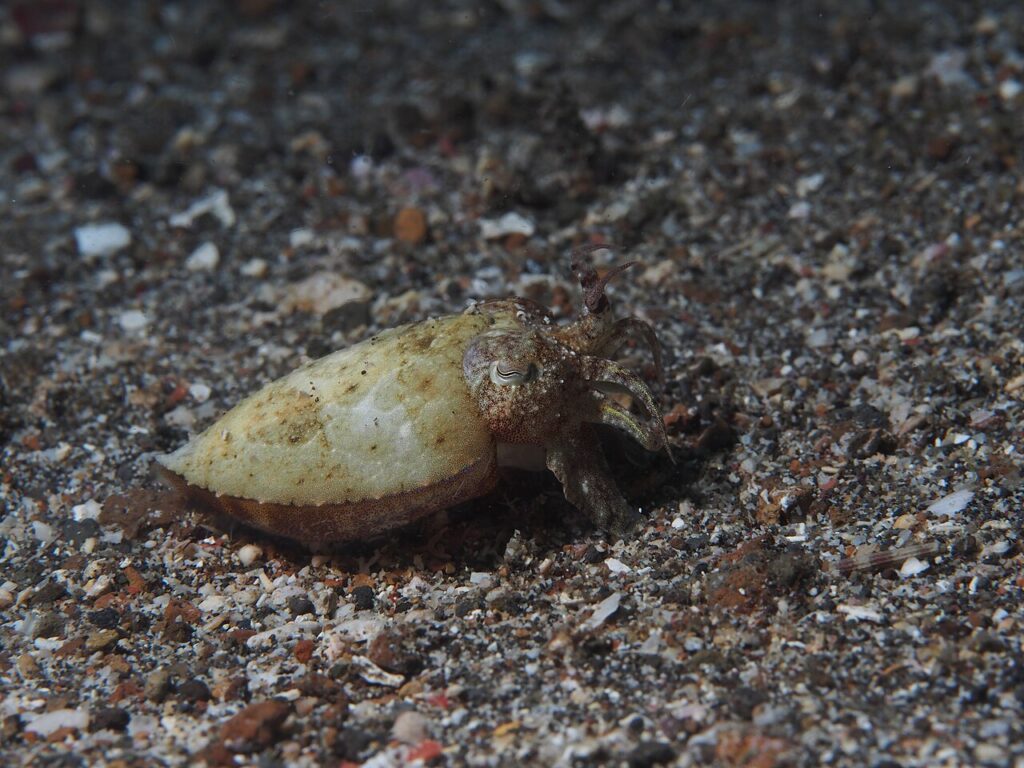
The dwarf cuttlefish (Ascarosepion bandense, formerly Sepia bandensis) is one of the few cephalopods that can be kept and bred in captivity. It is small, intelligent and fascinating, but it is also short-lived, carnivorous and demanding about water quality. This is a specialist’s animal, not a casual pet.
Overview and Appearance
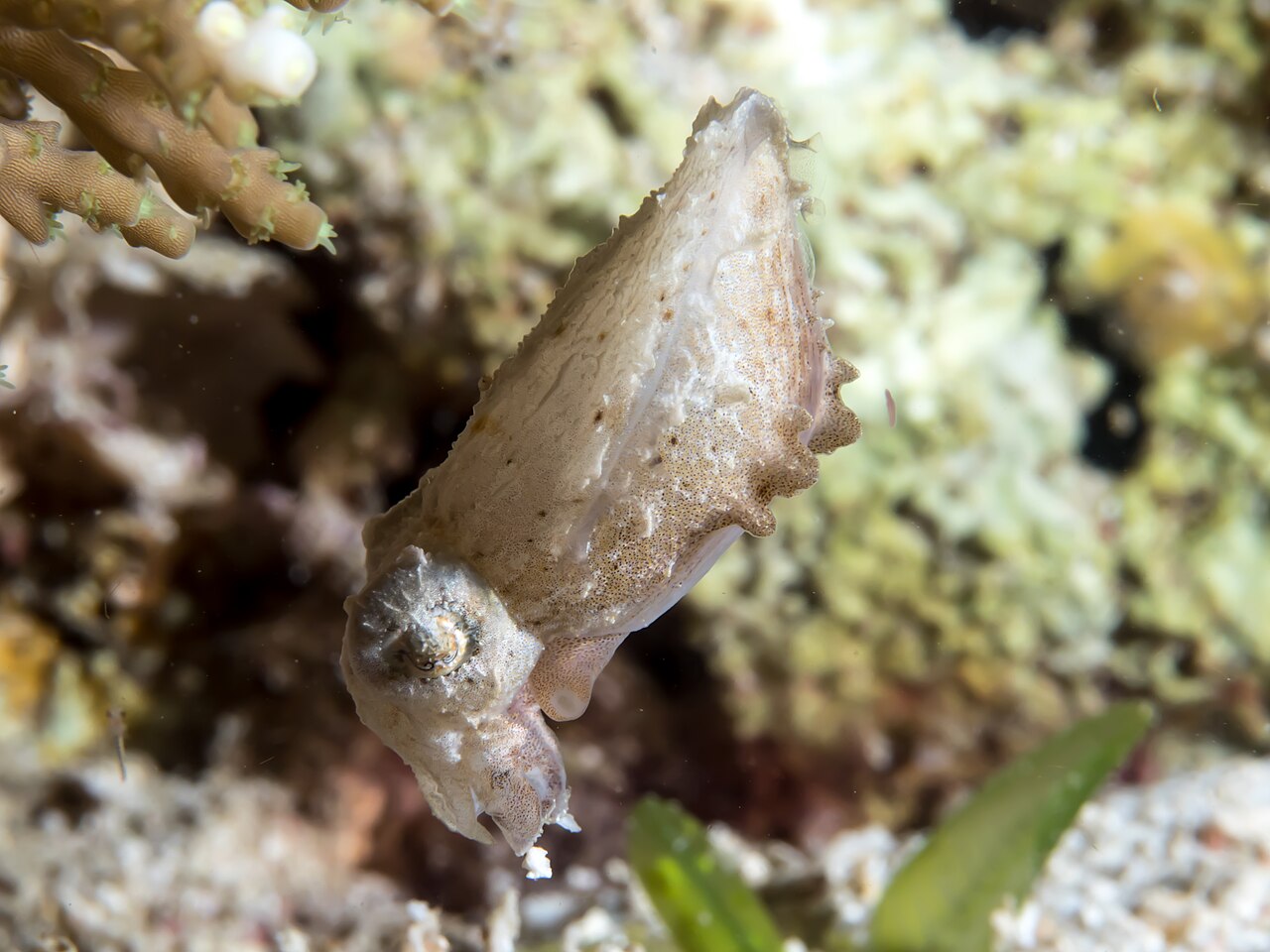
Dwarf cuttlefish are small, stocky cuttlefish with a mantle of about 4 to 7 cm (roughly 2 to 3 inches). They change color and skin texture within moments to match their background. Like all cuttlefish, they have eight arms, two feeding tentacles and large, W-shaped pupils.
In the wild they range from the Indian Ocean and Indonesia to the Marshall Islands. A 2025 field study in the Philippines found them only after sunset, at about 6 to 12 m depth, hiding in reef crevices and caves, in warm water around 29.6 °C. That tells us they are shy and prefer cover.
Size and Lifespan
Expect a very short life. Reported lifespans are roughly 6 to 9 months for females and 9 to 12 months for males, though the figure is lightly sourced. They mature at about 3 to 4 months, breed, then decline (senescence). Buy a young animal and know the clock is ticking. Many hobbyists keep them as part of a breeding line instead.
Tank Size and Setup
There is no single authoritative tank size. As a hobby guideline, many keepers suggest a minimum around 30 gallons for one animal, with 40 or more for a pair or group. Key points:
- A tight-fitting lid, since cephalopods can escape through tiny gaps, and cover intake and overflow openings
- A mature, stable saltwater system; see how to set up a saltwater aquarium
- A fine sand bed and rock caves or overhangs for shelter and egg-laying
- Gentle flow so they are not blown around
- Skip anything that can trap them, like powerful uncovered pump intakes; use a pre-filter sponge
- A reliable aquarium heater and controller
Just a heads up: some of the links in this post are affiliate links, which means I may earn a small commission if you buy through them. But no worries, it is at no extra cost to you. Also, as an Amazon Associate I earn from qualifying purchases.
Cuttlefish produce ink and lots of waste. Ink can foul a tank and harm animals, so strong filtration and a protein skimmer help.
Water Parameters
Typical reef conditions apply, with extra emphasis on zero ammonia and nitrite and low nitrate. Wild data from the Philippine study recorded about 32.6 PSU salinity. As a guideline, aim for temperature 74 to 78 °F, specific gravity 1.023 to 1.025, and steady parameters. Test with a good marine test kit. Cephalopods are sensitive to copper, so never use copper medications in the tank or on equipment that touches it.
Diet
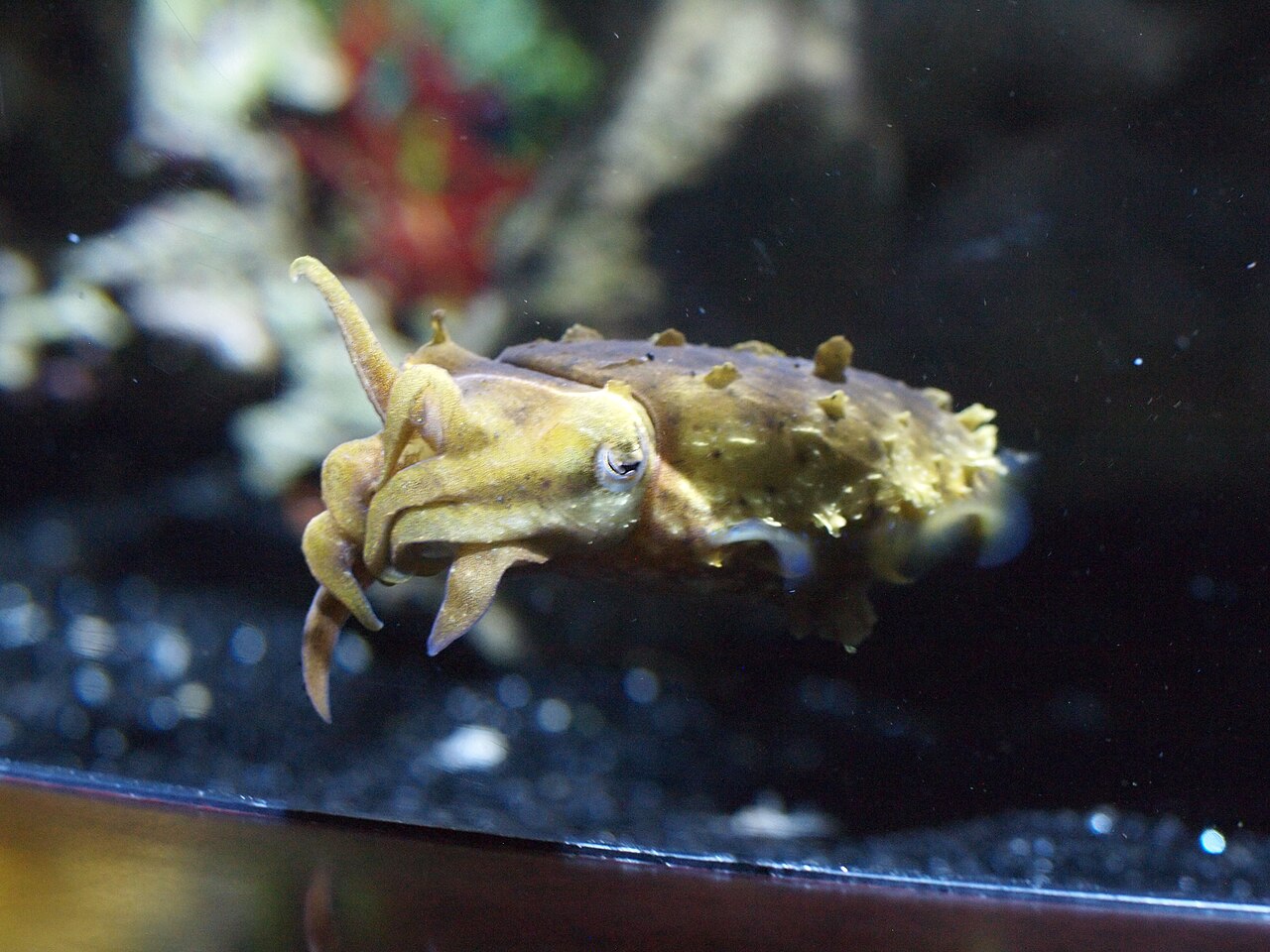
Dwarf cuttlefish are obligate carnivores that hunt by sight, mainly crustaceans and small fish, and can use venom on prey. In the aquarium:
- Live grass shrimp, ghost shrimp or small crabs are the usual staple for new animals
- Many captive-bred animals can be trained to take frozen shrimp, mysis or krill, often offered on tweezers or a feeding stick
- Feed small amounts once or twice daily and remove leftovers
Wild-caught animals can refuse dead food, which is a common problem. Buy captive-bred if you can and ask what the animal is already eating. Live feeder shrimp are available through some stores; frozen mysis shrimp are a convenient alternative once the animal accepts them.
Temperament and Tank Mates
Cuttlefish are not social with most tank life. Males can fight, and in captivity females and young males can often be housed together if there is enough space. They will hunt shrimp, small fish and crabs, so cleaner shrimp and similar animals are food. Fish may harass or nip a slow cuttlefish. Many keepers use a species tank with only live rock, snails and perhaps tiny peaceful animals. Avoid corals that sting, anemones, and anything fast or nippy. See our related guides on cleaner shrimp if you want to understand what would be at risk.
Breeding
Breeding is the reason many hobbyists keep them. Females lay grape-like clusters of eggs on rock or decor, which hatch in about four weeks into precocial young that look like tiny adults and need small live foods such as mysis or tiny shrimp. Captive animals have been cultured for multiple generations with a generation time around four months. Separate eggs or move adults if you want to raise the young.
Common Health Issues
Problems usually come from stress and water quality: ink-related water fouling, skin injuries, refusal to eat, and rapid decline. The final months of life include natural senescence, with pale color, tattered skin and loss of appetite, and this is normal rather than a disease. Aquatic vets with cephalopod experience are rare, so prevention is key. For general principles, see quarantine tank setup.
Honest Difficulty Level
Advanced. You need a mature tank, live or trained frozen foods, a secure lid and the emotional readiness for a pet that lives about a year. It is a rewarding species for experienced saltwater keepers, and a poor choice for impulse buyers.
From Aquagram
Explore AquagramTest Account
Hello aquarists!
Dan GL
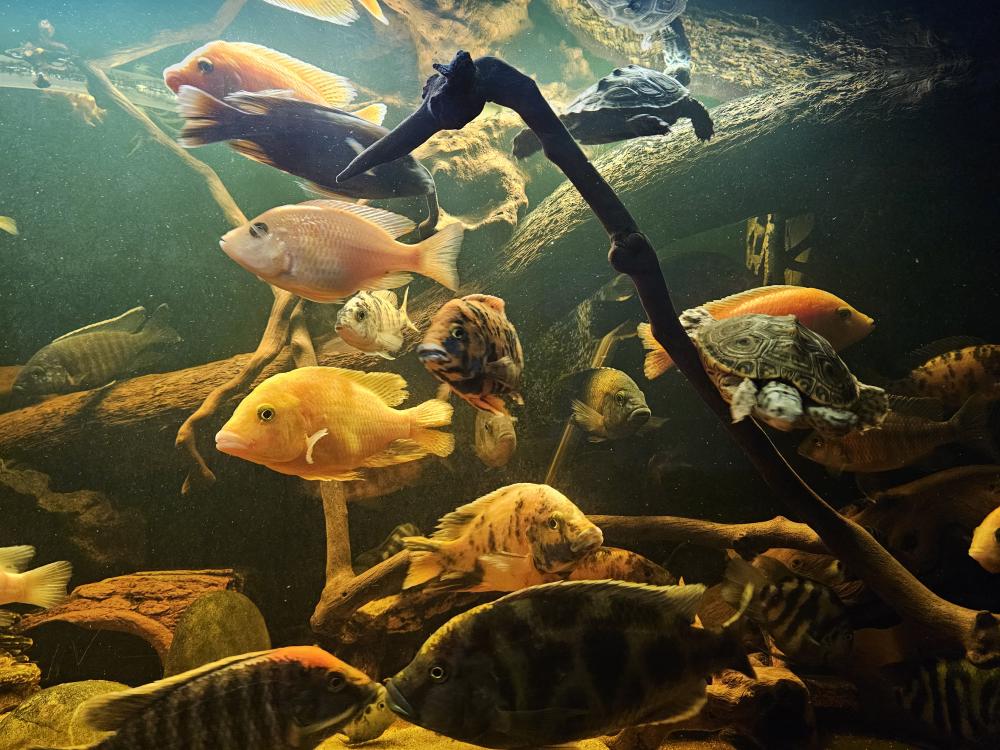
A view of my 125 gallon aquarium. Lots of fish and a few Northern Diamondback Terrapins too! 😁
SwitchTank
Incredible!
FAQ
Do cuttlefish make good pets?
For experienced saltwater hobbyists, yes. For beginners, no. They are short-lived and need specialized care.
Can you keep cuttlefish as pets?
Yes, the dwarf cuttlefish is one of the species commonly kept, but check local laws and buy captive-bred animals when possible.
How long do dwarf cuttlefish live?
Roughly 6 to 12 months.
What do dwarf cuttlefish eat?
Live crustaceans such as grass shrimp, and in many cases frozen shrimp or mysis.
How big a tank does a dwarf cuttlefish need?
Hobby guidance is about 30 gallons for one, more for several.
Are dwarf cuttlefish and flamboyant cuttlefish the same?
No. Flamboyant cuttlefish are a different, much more demanding species.
Can I keep a dwarf cuttlefish in a reef tank?
It is risky: they eat shrimp and crabs, and ink can foul the tank. A dedicated species tank is safer.
Final Thoughts
Dwarf cuttlefish are brilliant, expressive animals. Go in knowing their lifespan, feeding needs and tank demands.
Disclaimer: This article is general information, not veterinary advice. For serious or persistent problems, consult an aquatic or exotic-animal veterinarian.
Sources and Fact Check
Reviewed 2026-11-16. Sources read: Wikipedia, “Dwarf cuttlefish” (mantle 4-7 cm, lifespan estimates for males and females, flagged as needing citations; maturity at 3-4 months; egg clusters and roughly four-week hatching; carnivory and venom; males fight, females and young males can be housed together with space); Gibbons et al. 2025, Ecology and Evolution, PMC12404650 (wild habitat in the Philippines, depth, temperature and salinity; multi-generation captive culture, generation time about four months; nocturnal sightings). Tank size, feeding frequency, tank mate advice and temperature/gravity targets are hobby guidelines rather than tested thresholds. Limitation: Google search was unavailable, and no cephalopod husbandry manual or veterinary source was reviewed.
Image credits via Wikimedia Commons: Rickard Zerpe (CC BY 2.0 and CC BY-SA 2.0), Bill Abbott (CC BY-SA 2.0).