
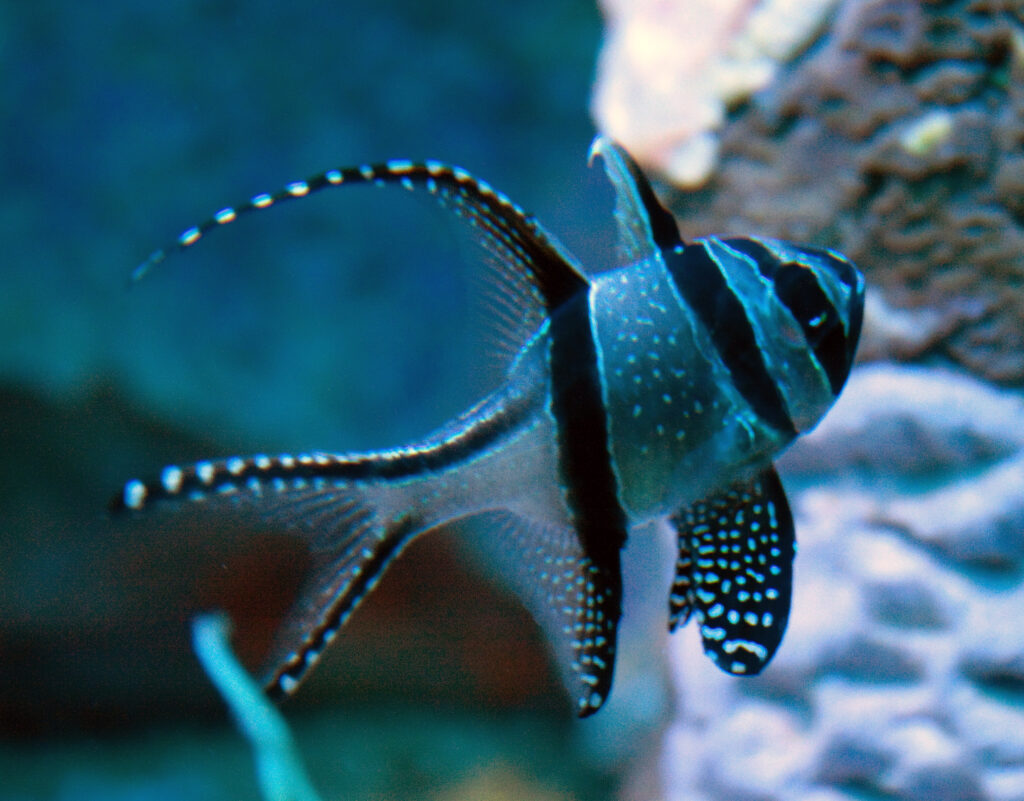
The Banggai cardinalfish (Pterapogon kauderni) is one of the most recognizable and best-loved marine aquarium fish. Its silver body, bold black bars, long trailing fins and white-spotted tail make it unforgettable, and it is a calm, slow-moving fish that suits peaceful reef tanks. It is also one of the few marine fish regularly bred in captivity, which matters, because wild populations are endangered. Here is what proper Banggai cardinalfish care involves.
Overview and Appearance
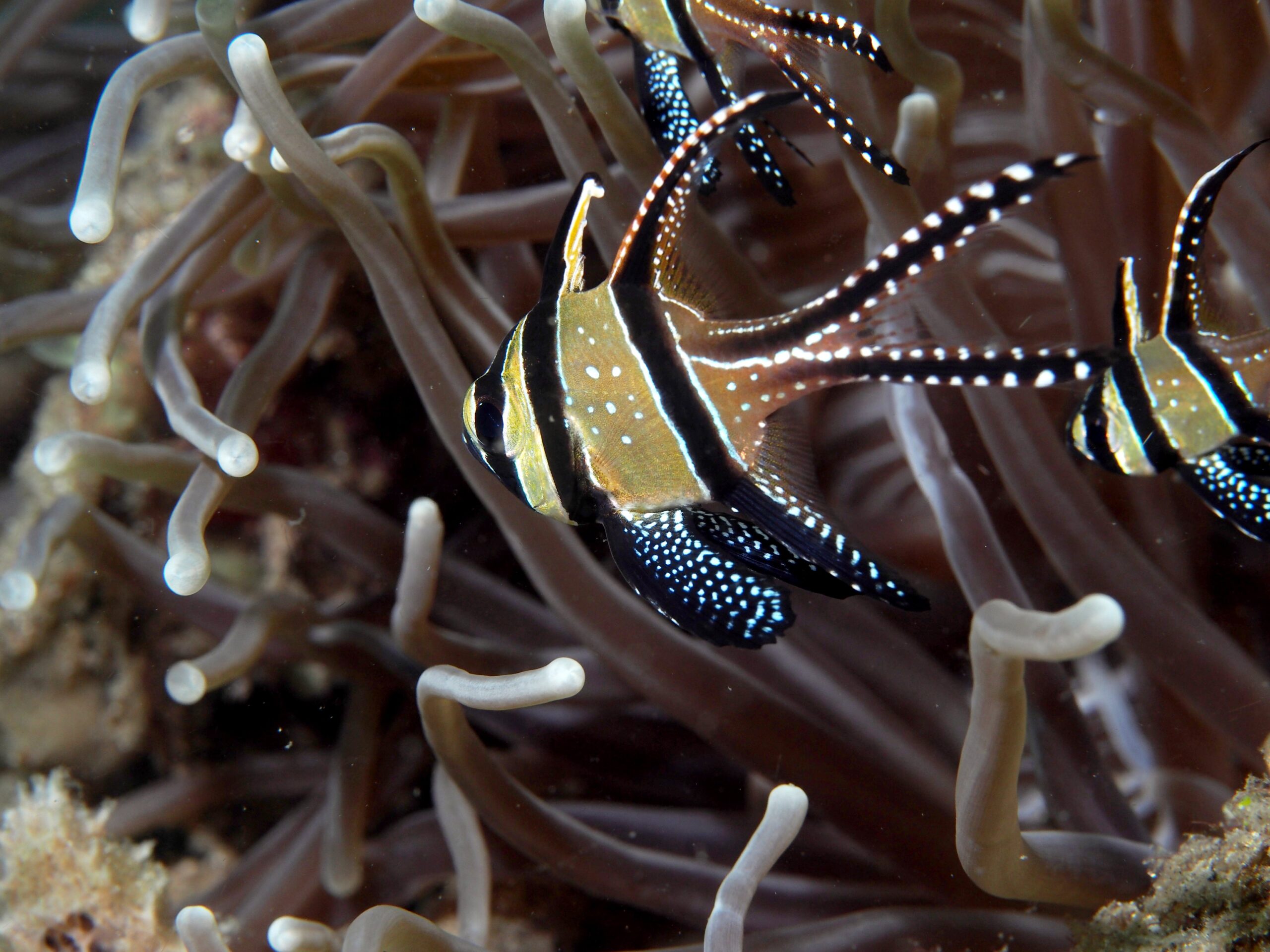
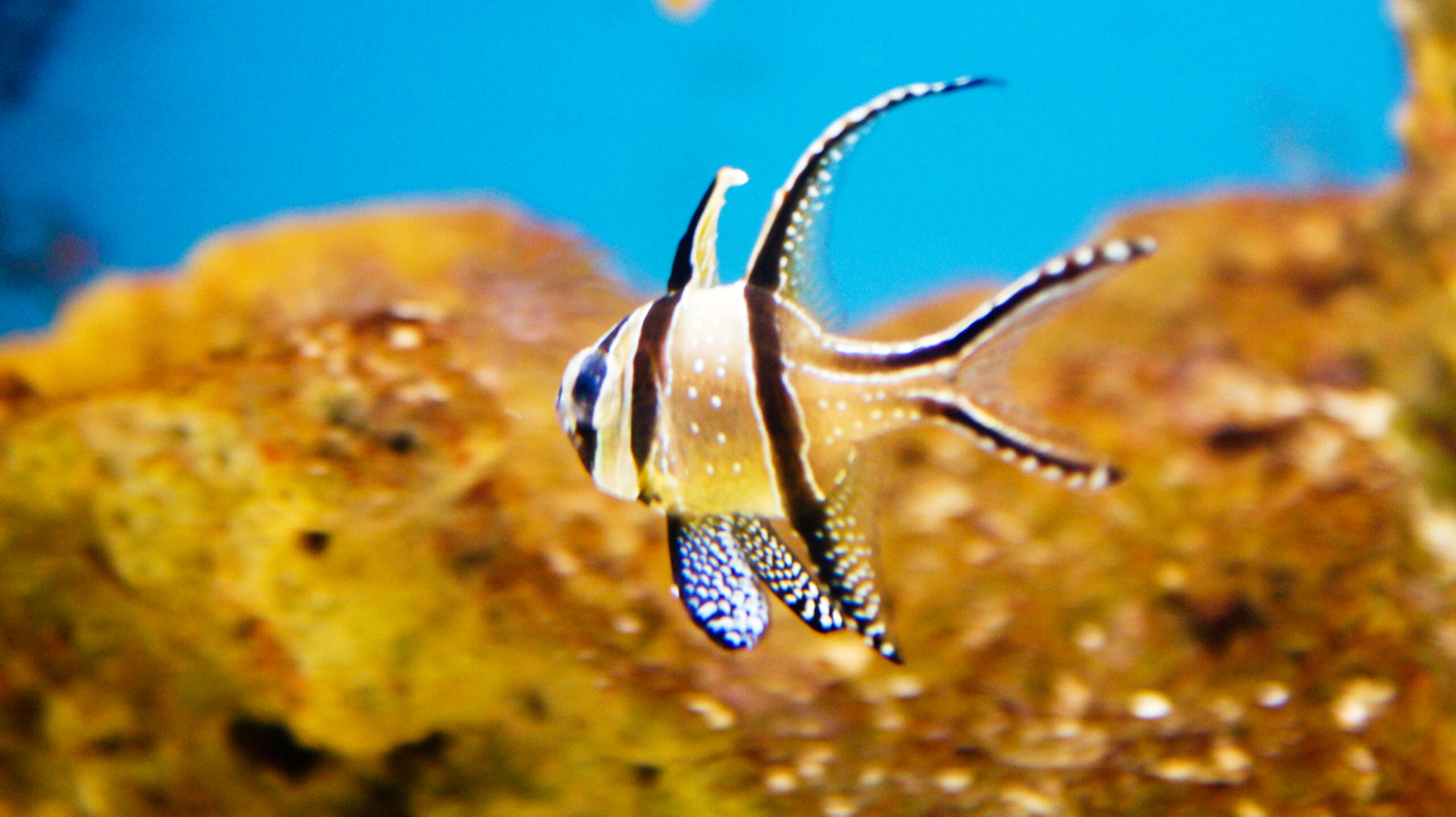
Banggai cardinalfish come from a tiny region of Indonesia, the Banggai Islands, where they live in shallow lagoons, among sea urchins, anemones and branching coral. Adults have a silvery-white body with three black vertical bars, extended dorsal and anal fins, and rows of white spots on the fins and tail.
Size and Lifespan
Banggai cardinalfish grow to about 3 inches (8 cm). With good care, they can live 4-5 years in captivity, and sometimes longer.
Tank Size and Setup
A single pair can live in a 20-gallon tank, but 30 gallons or more is better for a group. They are not strong swimmers, so they prefer calm, moderate flow and plenty of places to hover.
- Live rock and structure: Give them caves, ledges and overhangs.
- Open water: Leave space near the middle of the tank to hover.
- Lid: Cover the tank. They can jump when startled, though it is not common.
- Mature tank: Add them to a tank that has been running at least a couple of months. See our saltwater aquarium setup guide.
- Lighting: They are nocturnal and prefer subdued light, so they are active when lights are low.
Water Parameters
- Temperature: 75-80°F (24-27°C)
- Salinity: 1.023-1.025 specific gravity (about 33-35 ppt)
- pH: 8.1-8.4
- Ammonia and nitrite: 0 ppm
- Nitrate: Under 20 ppm
Banggai cardinalfish are sensitive to rapid changes. Test regularly with a saltwater test kit, and use a refractometer to keep salinity stable.
Just a heads up: some of the links in this post are affiliate links, which means I may earn a small commission if you buy through them. But no worries, it is at no extra cost to you. Also, as an Amazon Associate I earn from qualifying purchases.
Diet
Banggai cardinalfish are carnivores that feed on small crustaceans in the wild. They readily accept captive diets and should be fed small amounts one or two times a day.
- Frozen foods: Mysis shrimp, brine shrimp and finely chopped seafood.
- Pellets and flakes: Small, high-quality marine pellets.
- Live foods: Copepods and baby brine shrimp, especially for newly bought fish.
Captive-bred fish usually eat prepared foods right away. Wild-caught Banggai can be harder to feed and may refuse anything but live foods at first.
Why Captive-Bred Fish Matter
Wild Banggai cardinalfish have been heavily collected, and the species is listed as endangered. Captive-bred fish are widely available, are usually healthier, hardier and accept food right away, and they do not take wild fish from the reef. Always choose captive-bred specimens when you can.
Temperament and Tank Mates
Banggai cardinalfish are generally peaceful, but adults can bicker with one another in small tanks, especially males. A pair or a group of several in a larger tank works best.
- Good tank mates: Ocellaris clownfish, royal grammas, firefish gobies, green chromis and other peaceful species.
- Reef safe: Yes. They do not bother corals or most invertebrates, though they may eat very small shrimp.
- Avoid: Aggressive fish, large predators and fast, boisterous eaters that out-compete them at feeding time.
Compare them with the general cardinalfish care guide for related species.
Breeding
Banggai cardinalfish are paternal mouthbrooders, one of the most fascinating behaviors in the hobby. A bonded pair courts, the female lays a clutch of large eggs, and the male holds them in his mouth for about 20-30 days. During this time, he does not eat. The fry are released fully formed and look like miniature adults.
To encourage breeding:
- Keep a bonded pair in a stable tank of 30 gallons or more.
- Feed high-quality frozen foods and offer live copepods.
- Keep the tank calm, with no aggressive tank mates.
- Move newly released fry to a separate breeder box or nursery if other fish might eat them.
- Feed fry baby brine shrimp or very small foods.
A male may eat or spit the eggs when stressed, which is common with first-time parents. Do not panic if the first clutches fail.
Common Health Issues
- Iridovirus (Banggai cardinalfish disease): A serious, often fatal virus that is common in wild-caught fish. It causes lethargy, weight loss and a sunken belly. There is no reliable treatment, which is another reason to buy captive-bred fish.
- Marine ich: Spots on the body and fins. Treat in a hospital tank. See our quarantine tank guide.
- Starvation: Wild-caught fish that do not eat can waste away.
- Parasites and poor water quality: Keep the tank clean and stable.
Quarantine all new fish for at least four weeks, and see our guide on dropsy in fish if a fish becomes swollen. For persistent problems, consult an aquatic veterinarian.
Difficulty Level
Easy to moderate. Captive-bred Banggai cardinalfish are hardy and a good choice for a first reef tank. Wild-caught fish are much riskier because of stress, disease and feeding problems. Their small adult size and peaceful nature make them ideal for nano reef tanks.
Banggai Cardinalfish FAQ
How big do Banggai cardinalfish get?
About 3 inches (8 cm).
What do Banggai cardinalfish eat?
Mysis shrimp, brine shrimp, small pellets and copepods. Offer small amounts once or twice daily.
How many Banggai cardinalfish can I keep together?
A pair in a 20-gallon tank, or a group of 4-6 in a larger tank with plenty of space.
Are Banggai cardinalfish reef safe?
Yes, they do not harm corals or anemones. They may eat tiny shrimp.
How long do Banggai cardinalfish live?
Around 4-5 years in captivity.
How can I tell if a Banggai cardinalfish is male or female?
It is hard. Males tend to have a slightly larger mouth, and a male holding eggs will have a swollen throat.
Are Banggai cardinalfish endangered?
Yes. Choose captive-bred fish.
Do Banggai cardinalfish need a bigger tank?
A 20-gallon tank works for a pair, but 30 gallons or more gives better stability and room for a group.
Final Thoughts
Banggai cardinalfish are peaceful, attractive and rewarding, especially for reef keepers who enjoy watching breeding behavior. Choose captive-bred fish, give them a calm tank, feed them well and quarantine newcomers, and they will be a long-lived addition.
Photo credits: Banggai Cardinalfish (5730533212) by Tony Hisgett, CC BY 2.0; Banggai cardinalfish (Pterapogon kauderni) (14225883270) by Rickard Zerpe, CC BY-SA 2.0; Banggai cardinalfish (Pterapogon kauderni) (1) by domdomegg, CC BY 4.0, via Wikimedia Commons.
Disclaimer: This article is general information, not veterinary advice. For serious or persistent problems, consult an aquatic veterinarian.