
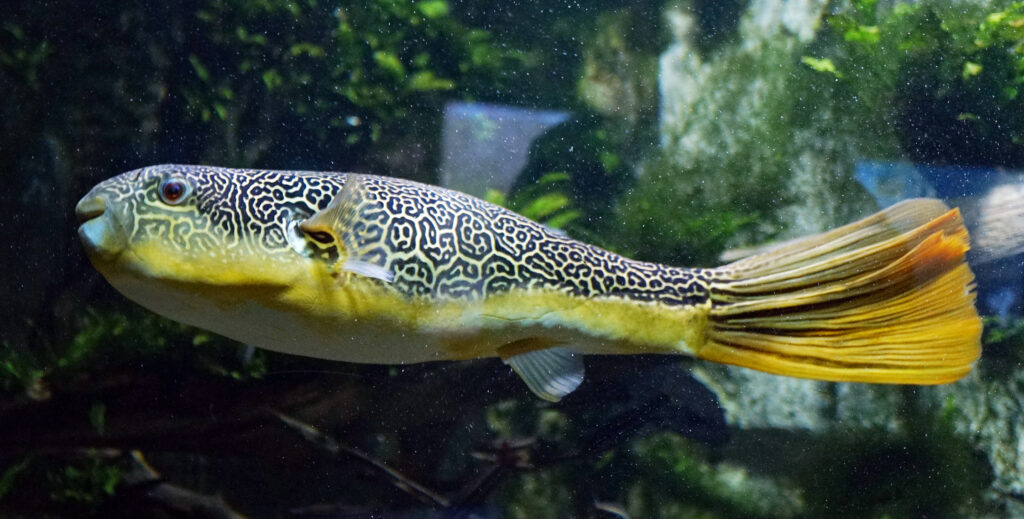
The mbu puffer (Tetraodon mbu) is the largest freshwater pufferfish in the hobby and one of the most intelligent. It is also one of the most demanding. A full-grown mbu needs a tank of roughly 300 gallons or more, powerful filtration, a diet of hard-shelled foods, and a species-only setup, and it can live more than a decade. That makes it a fish for experienced keepers with the space and budget, and a fish that should never be bought as a cute juvenile on impulse.
This guide covers what an mbu really needs, what goes wrong, and an honest answer to whether you should keep one.
Mbu Puffer Overview and Appearance
Mbu puffers come from the Congo River basin and Lake Tanganyika drainage in Central Africa. They have a beautiful maze-like pattern of dark lines on a pale olive to yellow body, a golden belly and, in many fish, orange or yellow fins. Their expressive eyes and curious behavior are what win people over. They recognize their keeper, beg for food and interact with the glass.
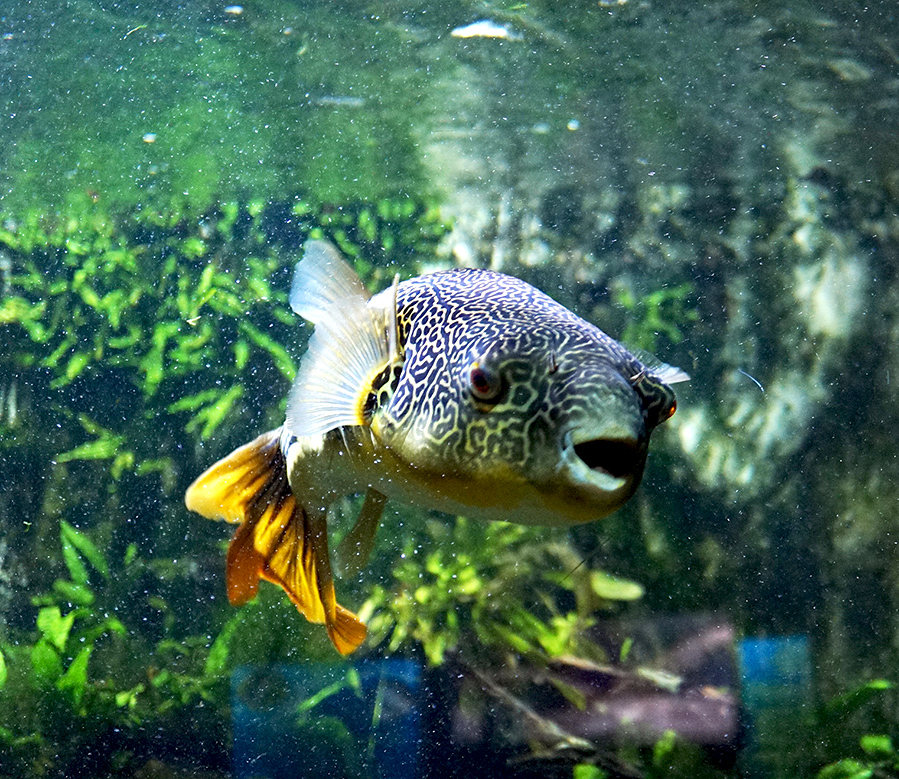
Like other puffers they have a fused beak that never stops growing, can inflate with water when stressed (inflation should be avoided, since it is dangerous out of water and stressful in it), and carry toxins in some tissues, so handle with care.
Size and Lifespan
- Adult size: about 20-26 inches (50-67 cm), occasionally larger
- Growth: fast. Juveniles can grow several inches in a few months
- Lifespan: about 10-15 years with good care
A juvenile sold at 3 inches will outgrow most home aquariums within the first year or two. Plan for the adult from day one.
Tank Size and Setup
This is where most mbu keepers fail. Recommended minimums for an adult are:
- Tank: at least 300 gallons, ideally a footprint around 8 x 4 feet or larger so the fish can turn around and swim.
- Juveniles: can start in a 125-180 gallon tank, but you must have the large tank ready or planned before they outgrow it.
- Lid: a heavy, secure lid. Big puffers can jump and can knock aside decorations.
- Substrate: smooth sand. Avoid sharp gravel.
- Decor: open swimming room with a few large, stable rocks and driftwood. Anything loose will be moved, and anything fragile will be broken.
- Plants: live plants are usually shredded or uprooted; use hardy, firmly anchored species if at all.
Because mbus are messy, heavy-feeding fish, filtration must be oversized. Use large canister filters, sumps or multiple external units rated for several times the tank volume. The same priorities apply as in our guide to high ammonia in a fish tank: a massive bioload and any filter failure can crash the tank quickly.
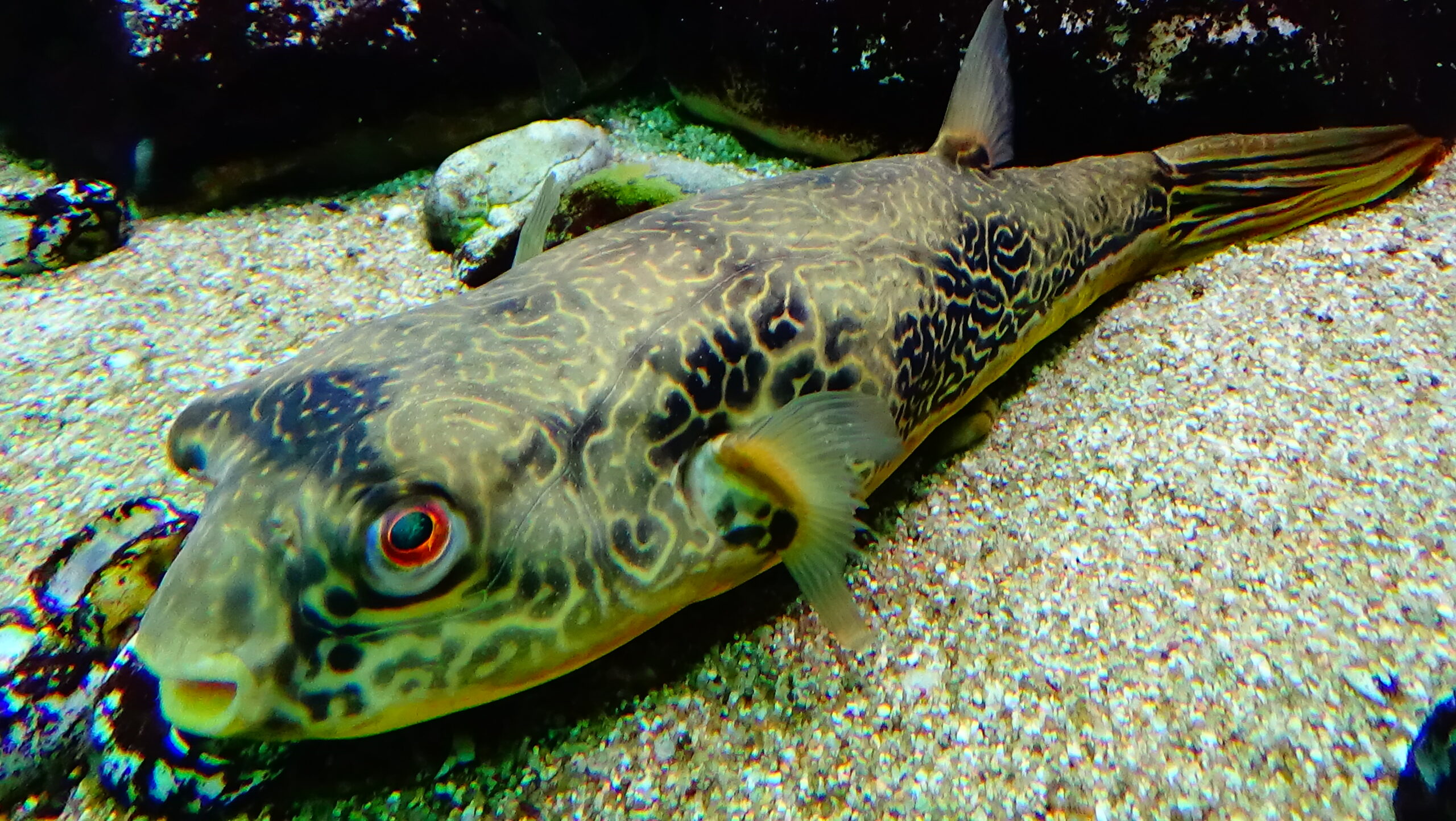
Powerful aquarium heaters in pairs, a reliable canister filter setup and backup power for pumps are not optional at this scale.
Just a heads up: some of the links in this post are affiliate links, which means I may earn a small commission if you buy through them. But no worries, it is at no extra cost to you. Also, as an Amazon Associate I earn from qualifying purchases.
Water Parameters
- Temperature: 75-82°F (24-28°C)
- pH: about 7.0-8.5
- Hardness: moderately hard water is fine
- Ammonia and nitrite: 0 ppm
- Nitrate: keep as low as you can, ideally under 20 ppm
Mbus are sensitive to dirty water. Test weekly with a liquid test kit such as the API master test kit and do large, frequent water changes, often 30-50% weekly in a heavily stocked system. Always dechlorinate with a good water conditioner.
Diet
Mbus are carnivores that eat hard-shelled prey in nature. They need foods that keep their ever-growing beak worn down.
- Staples: snails, clams and mussels in the shell, crab and crayfish pieces, whole shrimp with shells
- Also offered: earthworms, frozen foods such as krill and silversides in moderation, quality sinking pellets sold for puffers
- Avoid: feeder goldfish, which carry disease and are nutritionally poor, and long-term diets of soft foods only
Feed juveniles daily or every other day and adults several times a week, in modest portions, because overfeeding makes the water foul and fish obese. A puffer with an overgrown beak may struggle to eat or to close its mouth. If you notice that, ask an aquatic vet or an experienced keeper about safe trimming. Do not attempt it alone, since the bite is strong and the stress is serious.
Temperament and Tank Mates
Mbus are intelligent but also aggressive, territorial and predatory. Their beak can strip fins and flesh from other fish in seconds. Most experienced keepers house them alone.
- Juveniles can sometimes live with similarly sized, fast fish for a short time.
- Adults can occasionally be kept with very large, robust, fast fish in a truly huge tank, such as some large cichlids or catfish, but this is risky and individual-dependent.
- Never house with slow, long-finned, small or timid fish. Never add invertebrates unless you intend them as food.
If you want similar puffer personality in a smaller system, look at our pea puffer, figure 8 puffer or green spotted puffer guides. For other large, advanced freshwater predators, see freshwater stingray care and the flowerhorn.
Breeding
Breeding mbu puffers in home aquariums is extremely rare. Reports are limited, and there is little reliable captive-breeding information. Assume you will never breed your fish. Wild-caught fish are common in the trade, which makes honest sourcing and quarantine especially important.
Common Health Issues
- Overgrown beak from a soft diet
- Ich and other parasites on newly imported fish. Quarantine every new fish; see our quarantine tank setup guide.
- Bacterial infections and fin rot from poor water quality
- Internal parasites in wild-caught fish
- Stress and refusal to eat after transport
- Bloating and obesity from overfeeding
Puffers are scaleless and sensitive to many common medications, especially copper and some dyes. Always research a medication’s safety for scaleless fish and use dosages carefully. For anything serious, work with an aquatic veterinarian.
Honest Difficulty Level
Expert. Mbu puffers are not hard because they are fragile; they are hard because of scale. The tank is enormous, the equipment expensive, the water must be exceptionally clean, the diet is specialized and the fish lives for years. Many mbus end up in unsuitable tanks or rehomed because the buyer did not plan for adult size. If you cannot commit to a 500-gallon-plus tank, choose a smaller puffer species.
Mbu Puffer FAQ
How big of a tank does an mbu puffer need?
At least 300 gallons for an adult, and many keepers recommend more. Juveniles can start smaller, but they outgrow small tanks fast.
How big do mbu puffers get?
Typically 20-26 inches (50-67 cm).
How long do mbu puffers live?
About 10-15 years in good conditions.
Can mbu puffers live with other fish?
Rarely. Most keepers keep them alone because adults are aggressive and bite fins and flesh.
What do mbu puffers eat?
Snails, clams, mussels, crab and crayfish, shrimp with shells and other hard-shelled foods that keep the beak from overgrowing.
Are mbu puffers poisonous?
Pufferfish can contain tetrodotoxin in some tissues. This is a concern if the fish is eaten or handled carelessly, not if you keep it as a pet and handle it safely. Never eat an aquarium puffer.
Are mbu puffers good for beginners?
No. They are an expert-level fish because of their size, bioload and long lifespan.
Can an mbu puffer live in a 125-gallon tank?
Only as a juvenile, briefly. An adult will not fit comfortably or healthily.
Do mbu puffers need brackish water?
No. Mbu puffers are a freshwater species.
Final Thoughts
The mbu is a spectacular, intelligent fish that deserves a spectacular tank. If you have the space, the budget and the experience, it can be one of the most rewarding fish in the hobby. If you do not, admire it in a public aquarium and choose a smaller puffer instead.
Photo credits: Tetraodon mbu 2 and Tetraodon mbu in Särkänniemi by Tiia Monto, CC BY-SA 4.0; Tetraodon mbu – aqua porte dorée 02 by Cedricguppy (Loury Cédric), CC BY-SA 4.0, via Wikimedia Commons.
Disclaimer: This article is general information, not veterinary advice. For serious or persistent problems, consult an aquatic veterinarian.