
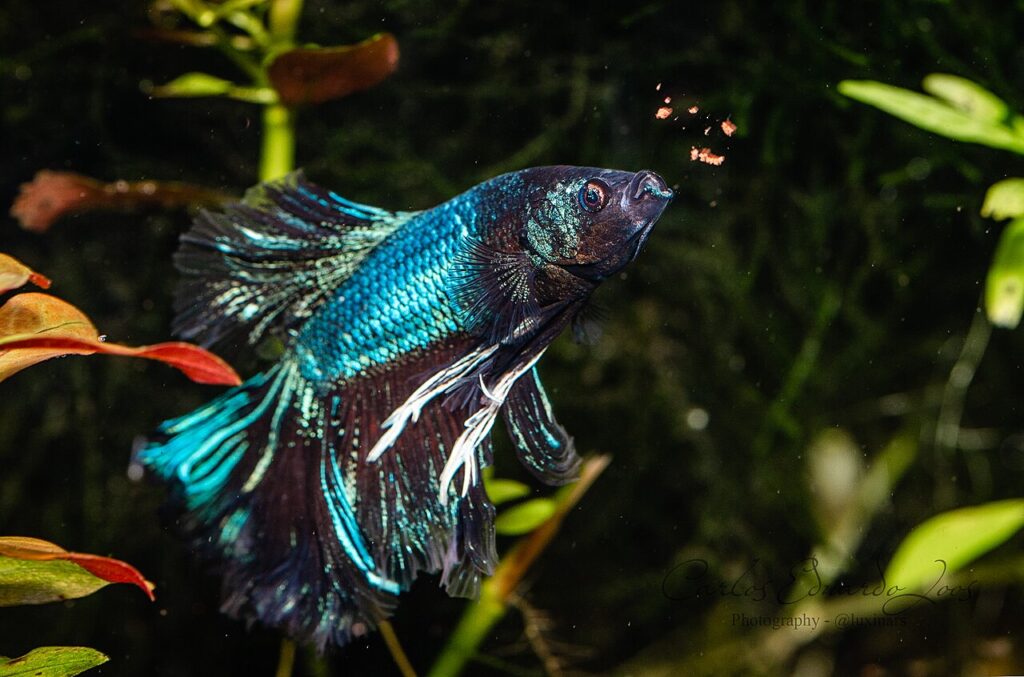
When a fish stops eating, the cause is most often something in its environment rather than the food: poor water quality, a recent move or water change, the wrong temperature, or stress from tank mates or a bare, exposed tank. Test your water first (ammonia, nitrite, nitrate, pH and temperature), then work down the checklist below. A fish that refuses food and also hides, breathes fast, clamps its fins or looks bloated or swollen needs faster action than one that is simply picky or newly arrived.
This guide covers every common version of the problem: my fish is not eating, fish not eating after a water change, fish not eating and hiding, fish not eating and staying at the bottom and betta not eating. Most of the causes are the same for all of them.
Most Common Causes of a Fish Not Eating (Ordered by Likelihood)
- Water quality problems. Ammonia and nitrite stress fish and can suppress appetite. Test before you do anything else.
- A new fish or a new tank. Moving is stressful. Many newly bought fish eat little or nothing for the first day or two.
- Temperature outside the species' range. Fish are cold-blooded, so every body process, including digestion and appetite, follows water temperature.
- Stress from tank mates or the setup. Bullying, too much light, no hiding places, constant flow or a very small tank can all put a fish off its food.
- Food it does not recognize or want. Wild-caught fish, many marine species and specialists such as puffers may ignore flakes or pellets.
- Food that is too large, floats when the fish feeds low (or the reverse), or has gone stale.
- A recent water change or product. A big swing in temperature, pH or hardness, or a new medication or additive, can briefly suppress feeding.
- Illness or parasites. This is usually suspected when other symptoms accompany the loss of appetite.
- Normal behavior. Some adult fish skip meals, and fish may eat less at spawning time or after a very large meal.
Step 1: Test the Water and Check the Temperature
Water quality is the first thing to rule out. University of Florida extension guidance notes that ammonia is the most important water quality parameter after oxygen, that nitrite can be toxic to fish at levels as low as 0.10 mg/L, and that you should test any time fish appearance or behavior changes. Use a liquid aquarium test kit rather than strips if you can, and read ammonia, nitrite, nitrate and pH.
Just a heads up: some of the links in this post are affiliate links, which means I may earn a small commission if you buy through them. But no worries, it is at no extra cost to you. Also, as an Amazon Associate I earn from qualifying purchases.
Ammonia and nitrite should read zero in an established tank. If either is above zero, follow our guide to high ammonia in a fish tank, because the fix there (water changes, a hold on feeding heavy meals, checking the filter) comes before anything about food. If the tank is new, it may simply not be cycled yet; see how to cycle a fish tank.
Then check the temperature with a separate thermometer, not the one built into a heater. Compare the reading to the range for your species. A failing aquarium heater is a quiet cause of fish going off their food, especially tropical fish in a cool room.
Step 2: Think About What Changed
Ask what happened in the last few days:
- Was the fish just added or moved? A fish that is hiding and not eating for the first one to two days is common. Keep the lights low, keep the tank quiet and offer a small amount of food once a day. Do not keep adding more if it is ignored; uneaten food rots and fouls the water.
- Did you do a water change? If the new water was a different temperature or had no dechlorinator, that can stress fish. See shrimp dying after a water change for the same cause in invertebrates. Match temperature, use a water conditioner and change a moderate share of the water rather than all of it.
- Did you add a new tank mate, decoration or medication? Bullying often shows up as one fish hiding and not eating while the others feed normally.
- Did the lights, filter flow or room temperature change?
If the fish is hiding as well as refusing food, read fish hiding all the time. If it is sitting on the substrate, read fish lying on the bottom of the tank.
Step 3: Match the Food to the Fish
Many "won't eat" problems are really "won't eat this" problems:
- Bettas are insectivores and often prefer high-protein pellets, frozen or live foods to flakes. A pellet that is too large can be refused. Our betta care guide covers feeding in more detail.
- Puffers, eels, predators and many marine fish may only accept live or frozen foods such as bloodworms, mysis, krill, shrimp or snails at first. Wild-caught fish can take days or weeks to accept prepared food.
- Herbivores and grazers need vegetable matter, not just meaty food.
- Bottom feeders need food that actually sinks and gets past the faster fish.
Try a different frozen fish food or a fresh pack of quality fish pellets. Old, damp or opened-for-a-year food loses its smell and nutritional value. Soaking food in a little tank water before feeding can make dry food easier for some fish to take.
Step-by-Step Fix When Your Fish Will Not Eat
- Test ammonia, nitrite, nitrate, pH and temperature. Fix any problem first.
- Do a partial water change (often 25-50% is used in established tanks) with temperature-matched, dechlorinated water if readings are off. Use a lower share if your water is soft or low in buffering.
- Reduce stress. Dim the lights, cover part of the tank, add hiding places and remove any aggressor.
- Offer a small portion of a different, appealing food once a day. Remove anything uneaten after a few minutes.
- Wait and watch. A healthy adult fish can usually go a few days without food. This is a hobby rule of thumb: juveniles, small fish and some species such as seahorses, dwarf puffers and mandarin dragonets cannot go as long.
- Look closely at the fish. Check for white spots, raised scales, swelling, cloudy eyes, damaged fins, stringy white feces or labored breathing.
- Quarantine or move a sick fish. A bare hospital tank lets you observe and treat without upsetting the display tank. See quarantine tank setup.
How to Tell Which Cause Applies
- Everyone stopped eating at once: suspect water quality, temperature, a filter or heater failure, or a recent change to the whole tank.
- One new fish will not eat, others are fine: suspect transport stress, the wrong food or bullying.
- One long-term fish stopped eating and is acting strange: suspect illness, and look for other signs.
- Fish is eating but then spitting food out: the food may be too large or the fish may have a mouth or teeth problem, which matters especially in puffers.
- Fish is bloated or has stringy white feces: see white stringy poop in fish.
- Fish has white spots or scratches against objects: see what are the white spots on my fish.
When It Is Serious
Treat the situation as urgent if the fish is not eating and has any of these: gasping at the surface or rapid gill movement, clamped fins (see betta clamped fins), sinking or floating abnormally, sudden color loss, bleeding, raised scales, swollen eyes or a swollen body. Also act quickly if a fish has gone without food for far longer than is normal for its species or if the fish is visibly thin. Contact an aquatic or exotic-animal veterinarian if you can; they can examine the fish and test for parasites or bacterial disease. Avoid dosing the whole tank with several medications at once, because it can add to the stress.
How to Prevent Appetite Problems
- Cycle the tank before adding fish and test regularly.
- Keep temperature stable with a reliable heater and a separate thermometer.
- Quarantine new fish and feed them a food they are already used to.
- Choose tank mates and tank size appropriate to the species.
- Vary the diet and buy fresh food in amounts you will use within a few months.
- Feed small amounts and remove leftovers.
FAQ: Fish Not Eating
Why is my fish not eating its food?
The most common reasons are poor water quality, stress from a recent move or change, the wrong temperature, or a food the fish does not recognize. Test the water and check the temperature first.
Why is my fish not eating after a water change?
A large or poorly matched water change can shift temperature, pH or hardness, and some fish go off food for a day or two. Match temperature, dechlorinate, and do smaller, steadier changes.
Why is my fish not eating and hiding?
Hiding plus no appetite suggests stress, bullying, a new environment or illness. Look for other symptoms and read our fish hiding all the time guide.
Why is my fish not eating and staying at the bottom?
This can reflect cold water, poor water quality, a swim bladder or buoyancy problem, or illness. Test the water, check temperature, and see fish lying on the bottom of the tank.
Why is my betta not eating?
Common causes are cold water, a new tank, a pellet that is too big, or a food it dislikes. Warm, stable water and a small, high-protein pellet or frozen food usually help. A betta that is also bloated, lethargic or has clamped fins needs closer attention.
How long can a fish go without eating?
It depends on the species, size and age. Many healthy adult freshwater fish can go several days, but juveniles and some specialist species cannot. If a fish refuses food for longer than is normal for its species, or shows other symptoms, investigate sooner.
Should I keep feeding a fish that is not eating?
Offer a small amount once a day and remove what is not eaten. Piling in more food spoils the water.
Can a stressed fish stop eating?
Yes. Stress from moving, bullying, noise, bright light or poor water quality is a very common reason fish stop eating.
Sources and Fact Check
Reviewed 2026-11-14. The causes and fixes above are practical husbandry guidance built on the sources below; hobby rules of thumb (water change sizes, days without food) are labeled as such and are not veterinary thresholds. This is not veterinary advice.
- UF/IFAS Extension, Ammonia in Fish Ponds and Aquaria (FA031): ammonia is the most important water quality factor after oxygen, nitrite toxicity from 0.10 mg/L, new biofilters take roughly 6-8 weeks, test when fish behavior changes.
- Merck Veterinary Manual, Management of Aquarium Fish: fish are poikilothermic so physiology follows water temperature, vets rely on a history of husbandry, new additions and quarantine, and sick fish may have a poor appetite.
- The food and species-specific feeding notes are general aquarium practice and are not drawn from a single source; check the care guide for your species.