
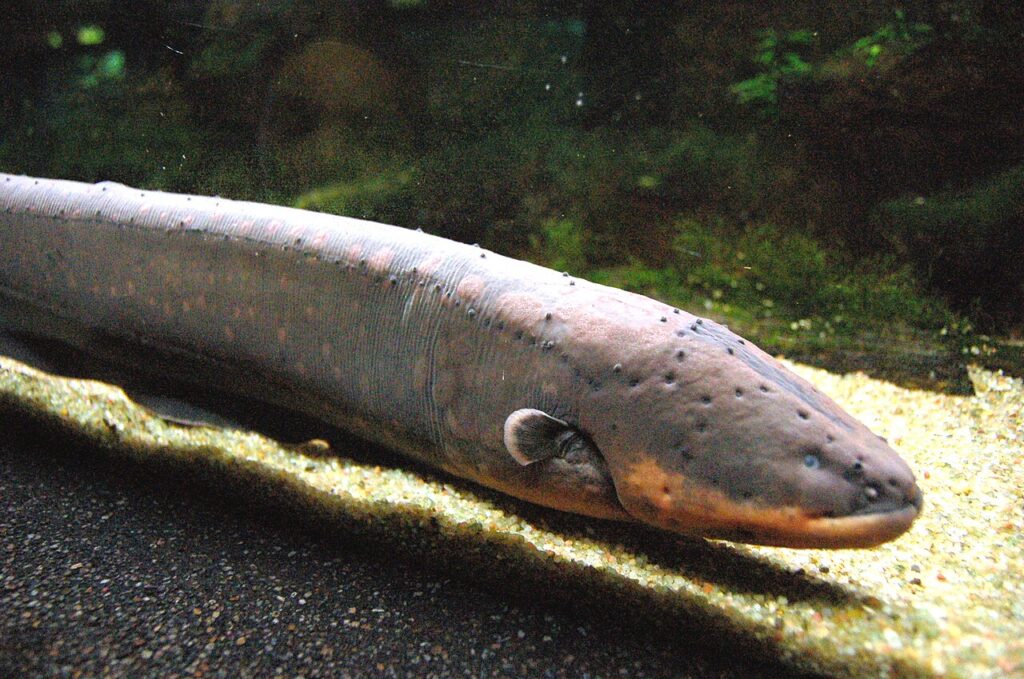
Electric eel care is one of the most demanding challenges in the freshwater hobby. These South American predators grow 6 feet (about 2 m) or more, need thousands of gallons of warm water, and can generate strong electric shocks. They are not a species for ordinary home aquariums, and in some places they are restricted or illegal to own, so check your local rules first.
This guide explains what an electric eel really needs, so you can decide honestly whether it's realistic.
Overview and Appearance
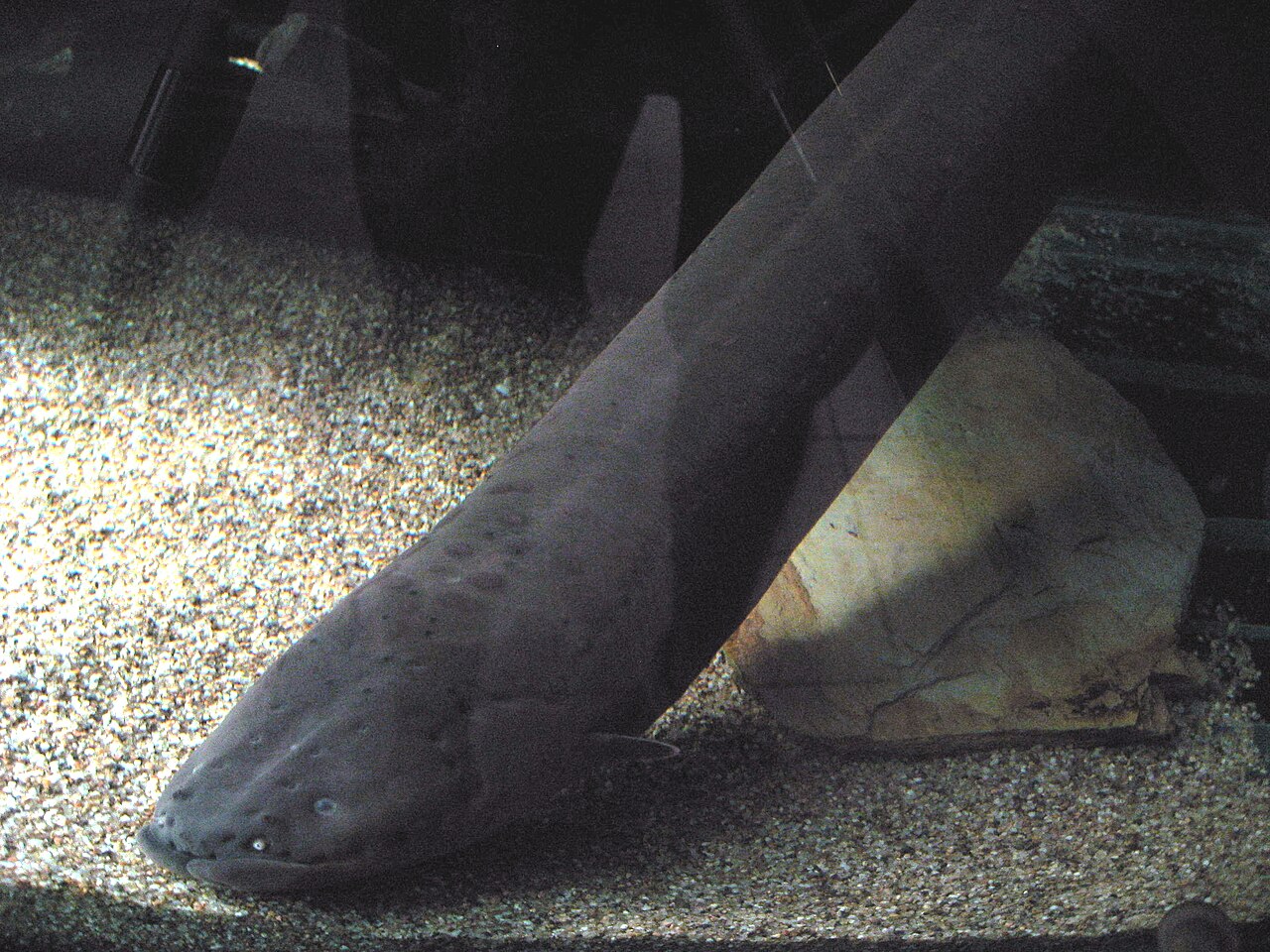
The electric eel (Electrophorus, long sold as Electrophorus electricus) is not a true eel. It is a knifefish related to the fish in our black ghost knifefish guide. It has a long, cylindrical, scaleless body, a flat head with a wide mouth and a long anal fin that runs along its underside, which it ripples to swim forward and backward.
Colors range from olive-brown to gray with an orange or yellowish throat. Scientists recognize more than one species, and different species can be larger or have different shock strengths.
Size and Lifespan
- Adult size: commonly 4-6 feet (1.2-1.8 m), with larger wild specimens recorded.
- Lifespan: often cited as 10-15 years in captivity, and sometimes longer with excellent care.
- Growth: juveniles sold at 6-12 inches can grow very quickly.
Tank Size and Setup
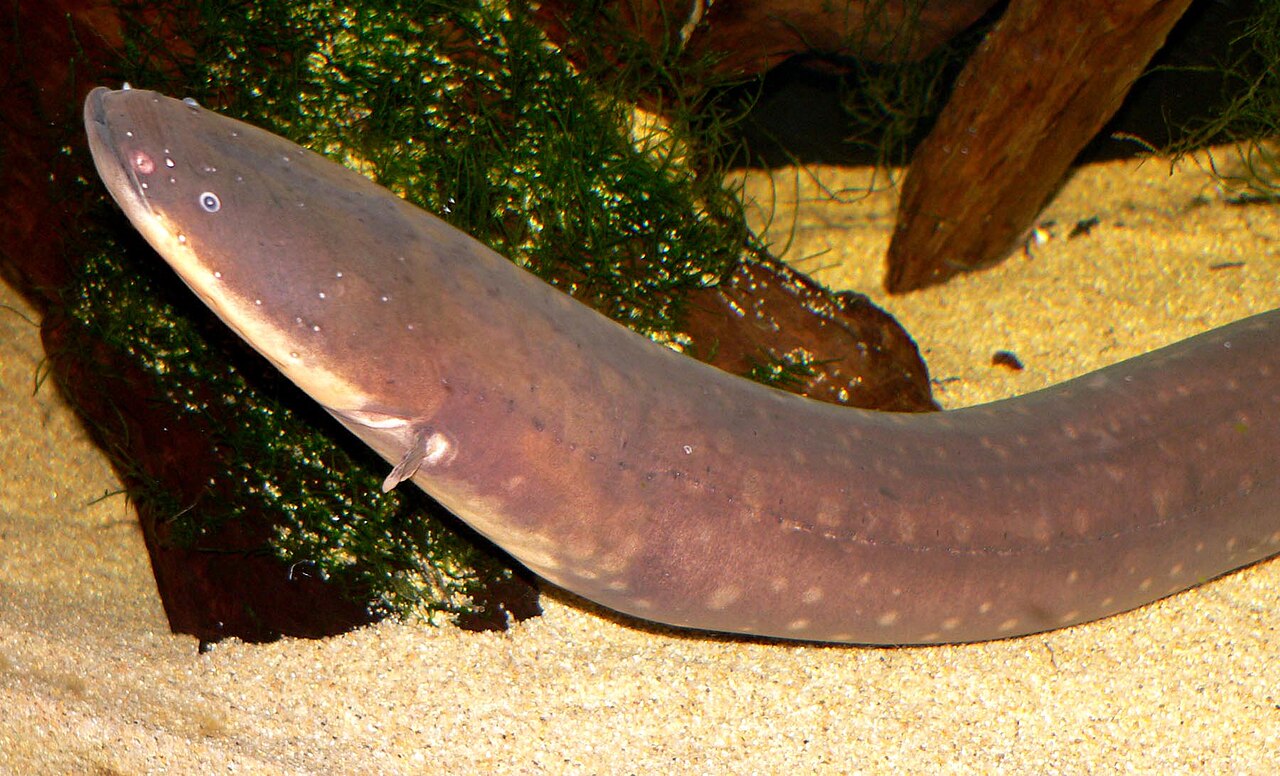
A juvenile can start in a 125-180 gallon tank, but an adult needs a purpose-built tank of 1,000 gallons or more, long and wide rather than tall. Many experienced keepers aim for at least 8-10 feet of length so the eel can turn around.
Setup essentials:
- Safety first. Never put your hands in the water while pumps, heaters or lights are powered. Use a plastic tank, GFCI outlets and drip loops, and use long tongs or siphon tools. A heavy, secure lid is mandatory, because eels can jump, and they also need access to the surface because they breathe air.
- Heaters: use a guarded titanium or protected aquarium heater sized for your volume, and avoid glass heaters the eel could break.
- Filtration: these are messy predators, so use heavy filtration such as a canister filter, or a sump, plus frequent water changes.
- Decor: smooth sand, large driftwood, and plastic or PVC tubes for hiding. Dim lighting helps, because they are nocturnal and shy.
Just a heads up: some of the links in this post are affiliate links, which means I may earn a small commission if you buy through them. But no worries, it is at no extra cost to you. Also, as an Amazon Associate I earn from qualifying purchases.
Water Parameters
- Temperature: 75-82°F (24-28°C)
- pH: 6.0-7.5
- Hardness: soft to moderately hard
- Ammonia and nitrite: 0 ppm, nitrate under 40 ppm
Use a freshwater test kit weekly. Large predators are very sensitive to water quality, and the amount of food they eat makes it easy to foul the tank. Our guides on cycling a fish tank and ammonia cover the basics.
Electric Eel Diet
Electric eels are carnivores. In captivity they usually eat:
- Earthworms, nightcrawlers and shrimp (juveniles)
- Frozen-thawed fish, whole prawns and silversides
- Live feeder fish are not recommended because of disease risk and ethics
Train your eel to take food from tongs. Juveniles eat several times per week and adults eat less often but in larger amounts. Some eels have developed a preference for one food, which is difficult to break, so offer variety early.
Temperament and Tank Mates
Electric eels are solitary and territorial. They can stun or kill fish and are generally kept alone. Some public aquariums house them with large, fast fish, but at home it usually goes badly. Small tank mates will be eaten, and large ones may be shocked.
Their shock is not just defense. Eels also use weak electric pulses to navigate and sense prey, and strong pulses to stun. A full-size eel can generate several hundred volts, which can be dangerous, especially for people with heart conditions. Treat the tank as an electrical hazard.
Breeding
Breeding in home aquariums is essentially unheard of. In nature, males build foam nests, and a single clutch may contain thousands of eggs. For hobbyists, plan on keeping one eel.
Common Health Issues
- Poor water quality: causes stress and infections.
- Ich and bacterial infections: can occur after stress or transport. See bacterial infections and what are the white spots on my fish.
- Mouth and skin damage: from hitting hard decor.
- Refusal to eat: common after being moved. Keep the tank dark and calm. Also see fish not eating.
- Medication caution: scaleless fish are sensitive to many treatments, so seek aquatic vet advice.
Quarantine any new fish in a large tank. Our quarantine guide covers the process, although a full-size eel makes this practically hard, which is one more reason not to buy a small one casually.
Honest Difficulty Level
Expert only. The price of the fish is the smallest cost. You need a huge tank, powerful filtration, a safe electrical setup, a heavy lid, food costs, and the legal right to keep the animal. Most juveniles sold in stores are outgrown within a year or two, and many end up surrendered or dumped. If you can't commit to 1,000+ gallons, look at a smaller predator such as a freshwater stingray or a fire eel, which, despite the name, is a spiny eel and not electric.
Electric Eel Care FAQ
Can you keep an electric eel as a pet?
Technically yes in many places, but it is restricted or illegal in some. Always check your state, province or country regulations before buying.
How big of a tank does an electric eel need?
A juvenile can start in 125-180 gallons, but an adult needs 1,000+ gallons.
How long do electric eels live?
Often 10-15 years in captivity, sometimes longer.
What do electric eels eat?
Whole frozen-thawed fish, shrimp and earthworms. Avoid feeder fish.
Can electric eels live with other fish?
Rarely. Most keepers keep them alone to avoid shocks and predation.
Are electric eels dangerous?
A large eel can deliver a painful and potentially dangerous shock. Never put your hands in the tank.
Do electric eels need air?
Yes, they breathe air at the surface and drown if they cannot reach it.
Are electric eels the same as fire eels or moray eels?
No. Fire eels are spiny eels, and morays are marine fish. Compare them in our guides to the zebra moray eel and snowflake eel.
Final Thoughts
Electric eels are fascinating animals, but they belong in public aquariums and the rare, well-resourced home with a custom 1,000-gallon system. If you cannot meet those needs, admire them from afar and pick a species that fits your space.
Disclaimer: This article is general information, not veterinary advice. For serious or persistent problems, consult an aquatic veterinarian.