
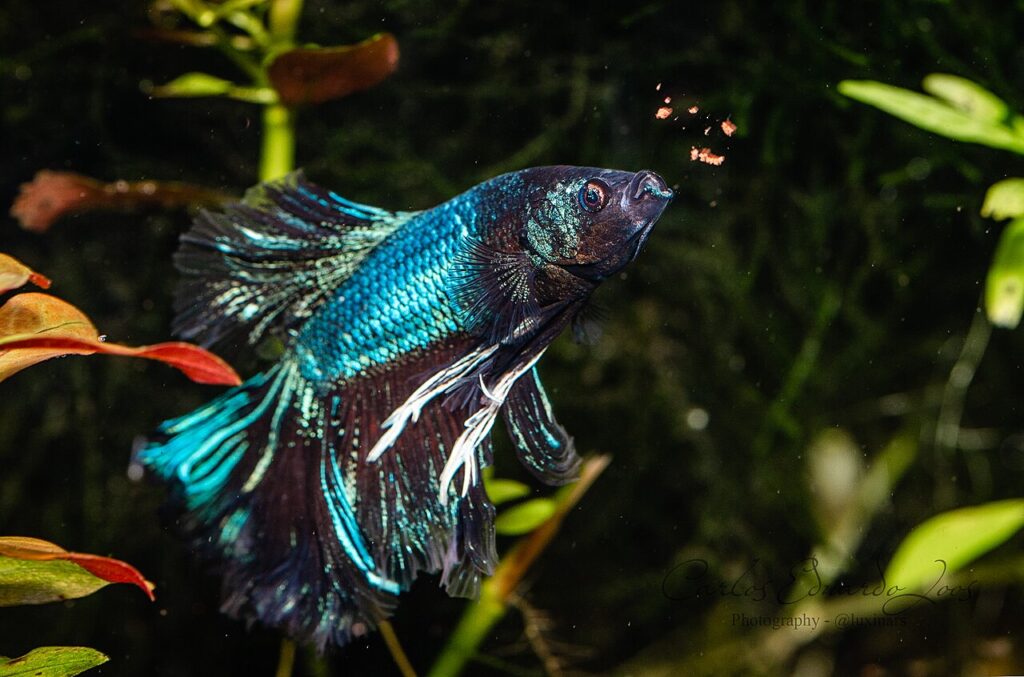
If your fish is bloated, the most common cause is overfeeding or a blocked gut (constipation), and it often improves within a few days of fasting, clean water and better food. But a swollen belly can also be a sign of something serious, such as dropsy (look for scales sticking out like a pinecone), an internal infection or egg retention. The key is to check the shape of the swelling and the scales before you do anything else.
This guide covers every common version of the problem: a bloated betta, a bloated goldfish, a fish that is bloated and floating or upside down, and a fish that is bloated and won't eat.
Most Common Causes of a Bloated Fish (Ordered by Likelihood)
- Overfeeding and constipation. The most frequent cause, especially in bettas and fancy goldfish. Dry flakes and pellets expand with water and fill a short gut quickly.
- Poor diet. Food with too much filler and not enough fiber or variety.
- Poor water quality. Ammonia, nitrite or high nitrate stress the fish and slow digestion. See our guide to ammonia in a fish tank.
- Temperature too low. Cold water slows digestion, so food sits in the gut.
- Swim bladder problems. A swollen belly with trouble balancing. See swim bladder disease.
- Egg retention or normal egg development. A round, firm belly in a healthy female that eats and swims normally.
- Dropsy. Fluid buildup, usually a symptom of internal infection or organ trouble. Scales stick out. See dropsy in fish.
- Internal parasites, bacterial infection or tumors. Less common and harder to confirm without a vet or a necropsy.
How to Tell Which Cause Applies
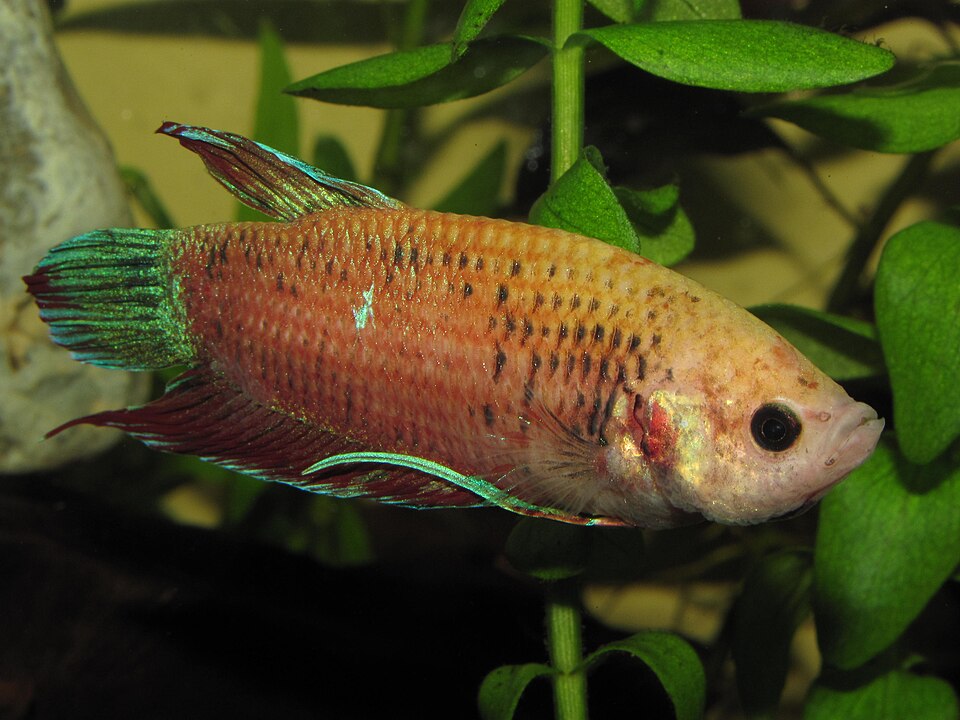
Look at your fish closely in good light, ideally from above and from the side.
- Round belly, normal behavior, scales flat, ate recently: most likely overfeeding or constipation.
- Bloated and stringy or no poop for several days: constipation or an internal problem.
- Scales raised like a pinecone, especially from above: suspect dropsy. This is serious.
- Bloated, floating, sinking or swimming sideways or upside down: swim bladder trouble, often linked to overfeeding.
- Female with a firm, even bulge and a white egg spot near the vent: likely eggs.
- Bloated on one side only: can be an internal mass, organ problem or infection.
- Bloated plus red streaks, pale stringy poop, lethargy or clamped fins: treat as an illness, not simple overfeeding.
If your betta is also hiding, see betta clamped fins and fish hiding all the time.
Step-by-Step: What to Do for a Bloated Fish
Step 1: Test the water
Use a liquid freshwater test kit. Ammonia and nitrite should read 0 ppm, and nitrate ideally stay under 20-40 ppm. If anything is off, do a 25-50% water change with a water conditioner.
Just a heads up: some of the links in this post are affiliate links, which means I may earn a small commission if you buy through them. But no worries, it is at no extra cost to you. Also, as an Amazon Associate I earn from qualifying purchases.
Step 2: Check the temperature
Tropical fish like bettas do best around 78-80°F (25-27°C). A reliable aquarium heater keeps digestion working.
Step 3: Pause feeding briefly
For an otherwise active, healthy adult fish, many keepers skip food for 24-48 hours, then feed small amounts. Do not fast juveniles, very thin fish or fish that are already weak for long.
Step 4: Change what and how you feed
- Feed only what the fish eats in about 1-2 minutes, one or two small meals a day.
- Soak dry pellets and flakes in tank water for a minute before feeding so they expand before the fish swallows them.
- Add variety: frozen or live foods such as daphnia, brine shrimp and bloodworms. Fancy goldfish benefit from a quality sinking goldfish pellet, and bettas do better on a high-protein betta pellet than on cheap flakes.
- Some keepers offer a bit of shelled, blanched pea for fiber, mainly for goldfish. It is a common hobby practice, but evidence is limited, so treat it as an optional extra and not a cure.
Step 5: Keep conditions calm and stable
Reduce stress: remove fin nippers, avoid big water changes in temperature and keep the tank cycled. Our cycling guide explains how.
Step 6: Use a hospital tank if it is getting worse
A bare quarantine or hospital tank lets you watch poop, control temperature and dose carefully without risking other fish.
When a Bloated Fish Is Serious
See an aquatic vet or an experienced fishkeeper if you notice any of these:
- Scales standing out (pinecone appearance), or bulging eyes
- No improvement after 5-7 days of clean water and a feeding change
- The belly keeps growing
- Red, ulcerated or bloody patches
- The fish stops eating completely and stays at the bottom or surface
Dropsy and internal infections are often hard to cure and may be fatal, particularly in advanced cases. Antibacterial medications sold for aquariums are sometimes used, but the right choice depends on the diagnosis, so get professional advice where you can. Our bacterial infections guide explains the options. This article is not veterinary advice.
How to Prevent a Bloated Fish
- Feed small portions. A betta's stomach is roughly the size of its eye.
- Soak dry foods and vary the diet.
- Fast healthy adult fish one day a week if you tend to overfeed.
- Keep water clean with regular weekly water changes.
- Keep the temperature steady for the species.
- Pick species-appropriate food, not generic flakes for everything. For goldfish, see our goldfish care guide.
Bloated Fish FAQ
Why is my betta fish bloated?
Overfeeding and constipation are by far the most common causes. Bettas have small stomachs, and dry foods expand. Fix the feeding routine and water quality first, and watch for scale-raising or lethargy.
My betta fish is bloated and floating or can't swim. What do I do?
That usually points to constipation or a swim bladder problem. Check water and temperature, skip a day or two of food, then feed soaked, smaller portions. If it persists beyond a week, seek help.
Why is my goldfish bloated and upside down?
Fancy goldfish have compressed bodies, so their gut and swim bladder are cramped. Overfeeding dry floating food is a classic trigger. Switch to soaked or sinking food and keep the water clean.
Why is my fish bloated and its scales sticking out?
Raised scales suggest dropsy, which is a sign of fluid retention from a serious internal problem. Isolate the fish, protect water quality and consult a vet promptly.
Why is my fish bloated and not eating?
Poor appetite plus bloating can mean constipation, infection or organ trouble. See our guide on fish not eating.
How long does it take for a bloated fish to recover?
Simple overfeeding often improves within 2-5 days. Anything lasting longer than a week needs a closer look.
Is a bloated fish contagious?
Constipation and egg swelling are not. If the cause is an infection, other fish may be at risk, especially in poor water.
Is my fish pregnant or just bloated?
Livebearers like guppies and mollies carry a gravid spot and a rounded belly. Egg-laying fish may look full of eggs. A fish that is active, eating and has flat scales is usually fine.
Final Thoughts
A bloated fish is most often a feeding problem, and the fix is cheap: soak the food, feed less, keep the water clean and warm. If the swelling comes with raised scales, a lethargic fish or no improvement after a week, treat it as serious and get help.
Has your fish had a bloated belly? Tell us what worked in the comments.
Disclaimer: This article is general information, not veterinary advice. For serious or persistent problems, consult an aquatic veterinarian.