
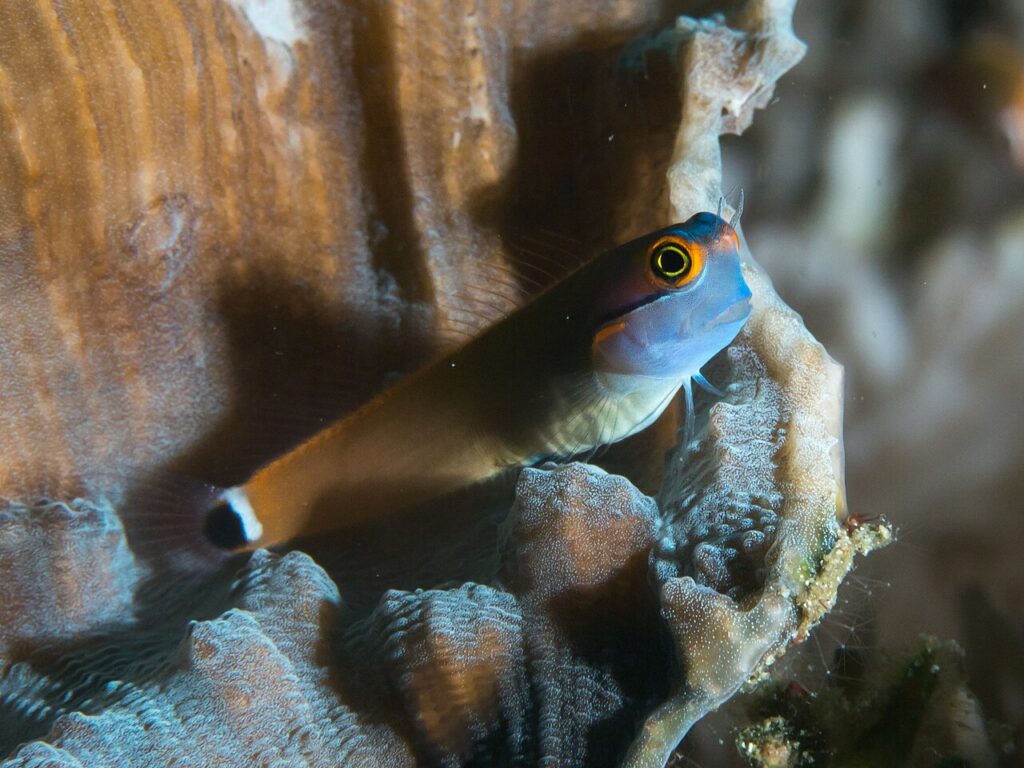
Tailspot blenny care is a good fit for small reef tanks: this peaceful, 3-inch algae grazer is reef safe, cheap and full of personality. The catch is that it needs a mature tank with plenty of algae and rockwork, and it's easy to starve it in a spotless new system.
Overview and Appearance
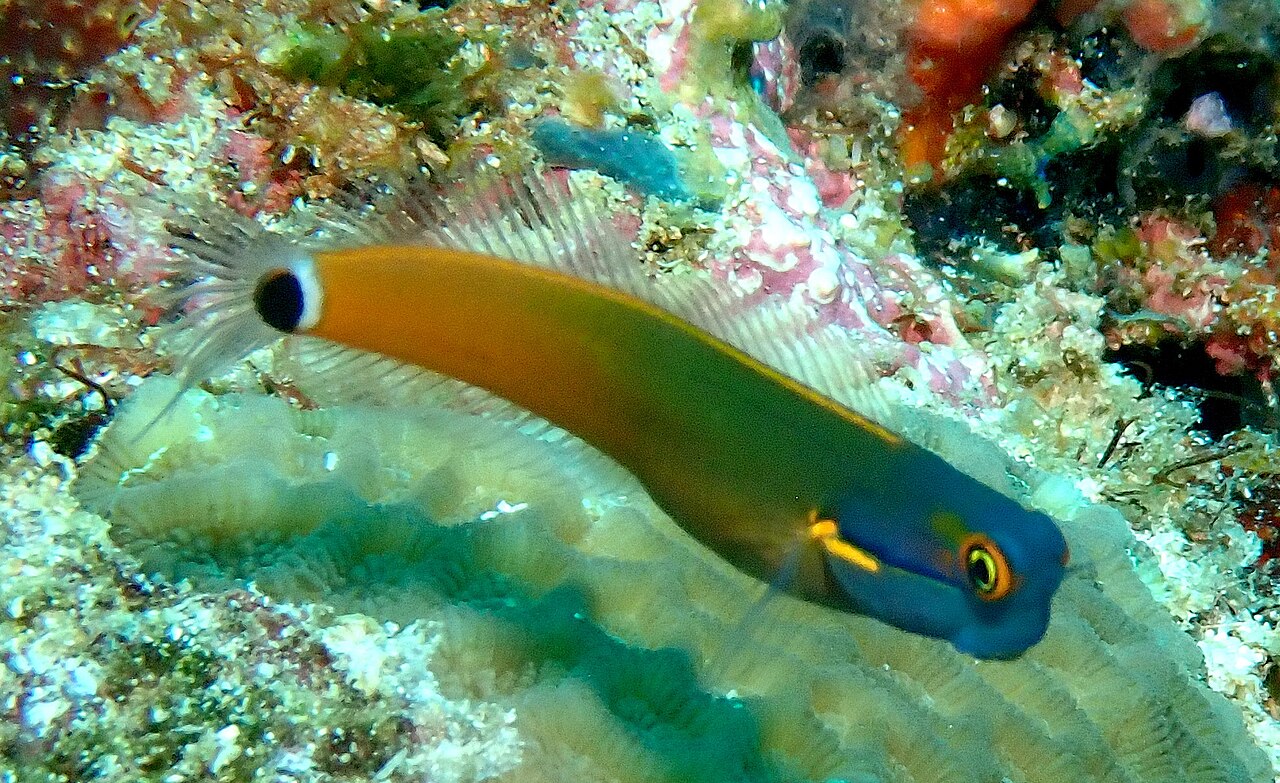
The tailspot blenny (Ecsenius stigmatura), also called the tailspot coralblenny or tailspot, is a small Indo-Pacific blenny. It is brown to tan, with a pale or bluish face, bright eyes, and a distinctive black spot with a white edge on the tail base, which gives the species its name.
Like other blennies it perches on rock, hops across surfaces and watches everything with its eyes mounted high on the head. Compare it with the bicolor blenny and the larger lawnmower blenny.
Size and Lifespan
- Adult size: about 3 inches (7-8 cm)
- Lifespan: commonly 4-6 years with good care, although hobby sources vary
Tank Size and Setup
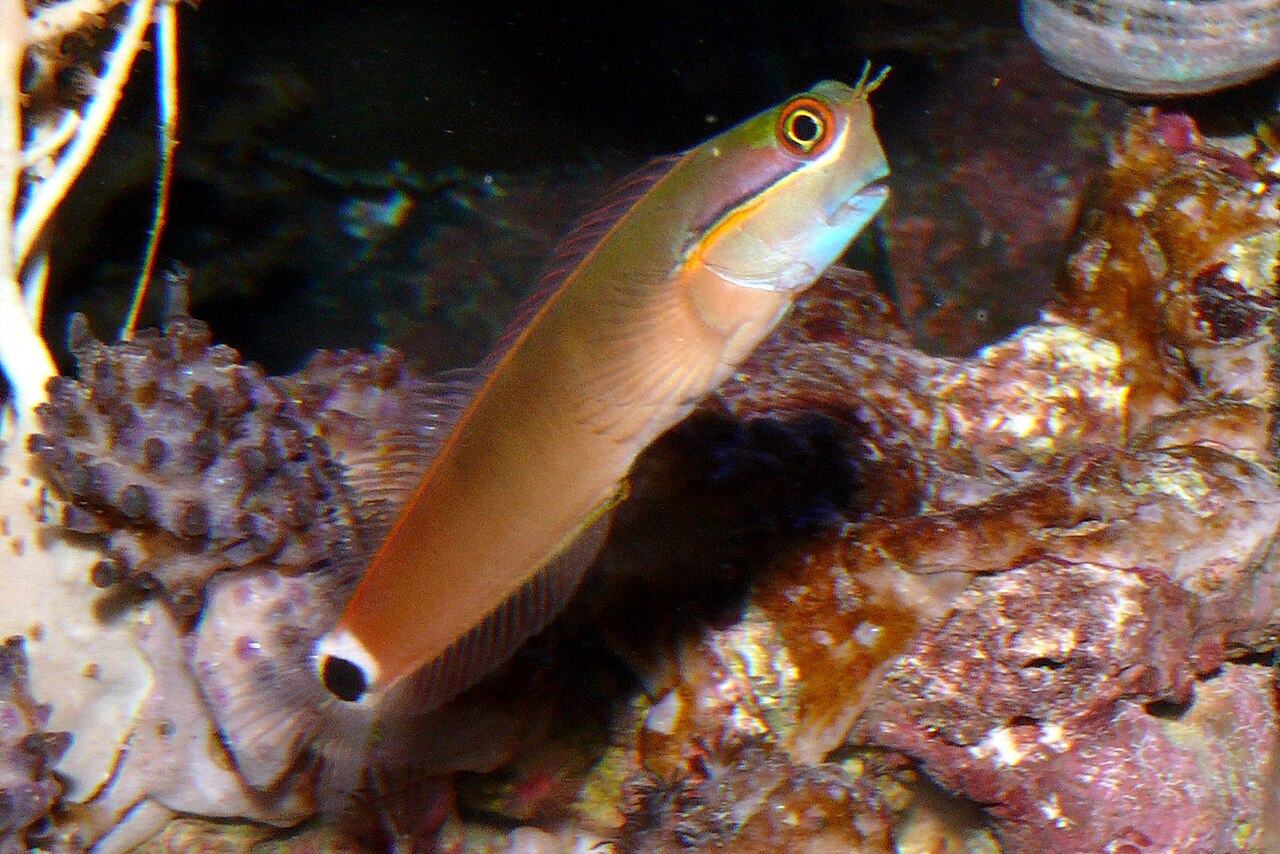
A 20-gallon tank is the usual minimum, with 30 gallons or more preferred if you add other fish. The tank must be fully cycled and mature enough to grow film algae. See our saltwater setup guide.
- Rockwork: lots of live rock with holes and crevices, which they use as homes. A snug hole slightly wider than the fish is perfect.
- Lid: blennies sometimes jump. Cover the tank.
- Flow and lighting: moderate flow and normal reef lighting. Algae growth under lights is part of their diet.
- Sand: optional. They spend time on rocks, not the sand bed.
Water Parameters
- Temperature: 72-78°F (22-26°C)
- Salinity: 1.023-1.025 specific gravity
- pH: 8.1-8.4
- Ammonia and nitrite: 0 ppm; nitrate low
Test regularly with a saltwater test kit and use a refractometer for accurate salinity.
Just a heads up: some of the links in this post are affiliate links, which means I may earn a small commission if you buy through them. But no worries, it is at no extra cost to you. Also, as an Amazon Associate I earn from qualifying purchases.
Tailspot Blenny Diet
Tailspot blennies are primarily grazers. In nature they eat algae, biofilm and small crustaceans from the rock.
- Algae and biofilm: need a mature tank with natural growth. A fresh tank may not have enough.
- Supplement: offer nori seaweed sheets clipped to the glass or rock a few times a week.
- Meaty foods: frozen mysis shrimp, brine shrimp and quality marine pellets or flakes, 1-2 times daily in small amounts.
A thin, hollow belly means the fish isn't getting enough. If your blenny isn't eating, see our guide on fish not eating.
Buying and Acclimating a Tailspot Blenny
Choose a fish that is alert, perches upright, has a rounded (not sunken) belly, clear eyes and intact fins. Ask to see it eat before you buy. Avoid fish with white spots, frayed fins or heavy breathing.
Acclimate slowly. Drip acclimation over 30-60 minutes helps limit salinity shock, and a quarantine period before the main display protects your reef. Blennies are shy at first, so expect your new fish to hide for a day or two, then start exploring the rocks.
Tailspot Blenny vs Other Blennies
Many hobbyists wonder which blenny to choose:
- Tailspot blenny: smallest, peaceful and reef safe, best for nano and small reef tanks.
- Bicolor blenny: more colorful but more territorial and sometimes aggressive toward similar fish.
- Lawnmower blenny: a heavy algae grazer that suits larger tanks with heavy algae growth, but it may starve in a clean system.
Temperament and Tank Mates
Tailspot blennies are peaceful, but a male can be territorial toward other blennies and similar-shaped fish.
- Good tank mates: clownfish, royal gramma, cardinalfish, gobies, firefish and most peaceful reef fish.
- Be careful with: other blennies in small tanks (keep one per tank under about 55 gallons), and aggressive fish such as large dottybacks, triggers and larger wrasses.
- Reef safe: generally yes. They do not usually bother corals or invertebrates, although individual fish can pick at the occasional clam mantle or polyp.
Breeding
Tailspot blennies are egg-layers. A pair will lay sticky eggs in a hole, and the male guards them until they hatch. Raising the larvae is difficult, because the tiny fry need very small live foods, and the hobby rarely does it at home. Expect to buy wild-caught or captive-bred fish.
Common Health Issues
- Marine ich: blennies can get it, particularly when stressed. See marine ich.
- Starvation: the most common loss in new tanks. Watch the belly.
- Stress from bullies: keep away from aggressive fish.
- Jumping: a lid prevents the loss of this small fish.
Quarantine new fish for several weeks in a bare tank. Our quarantine tank setup guide walks you through it.
Honest Difficulty Level
Easy to moderate. It's hardy and small, but it needs a mature tank and steady feeding. Beginners can keep one, provided the tank is at least a few months old and they supplement the diet. Wild-caught fish carry more stress and parasite risk than captive-bred fish.
Tailspot Blenny FAQ
How big of a tank does a tailspot blenny need?
A 20-gallon tank is the minimum, and a 30-gallon is better if you add other fish.
Are tailspot blennies reef safe?
Generally yes. They graze algae and rarely bother corals.
What do tailspot blennies eat?
Algae and biofilm, plus mysis, brine shrimp, nori and quality marine flakes or pellets.
Do tailspot blennies eat hair algae?
They graze film algae and some soft algae, but they aren't a dependable cure for heavy hair algae. See our guide to hair algae.
How long do tailspot blennies live?
Commonly 4-6 years in a healthy tank.
Can you keep two tailspot blennies together?
Usually only in a larger tank with plenty of rock holes, and aggression is still possible. A single fish is the safer option.
Can tailspot blennies live with clownfish?
Yes. Both are peaceful and occupy different areas. See our clownfish care guide.
Final Thoughts
The tailspot blenny is a cheerful, small and generally reef-safe fish that rewards a mature tank. Give it rock caves, supplement its diet and avoid aggressive tank mates, and it will be a fun, long-lived resident.
Disclaimer: This article is general information, not veterinary advice. For serious or persistent problems, consult an aquatic veterinarian.