
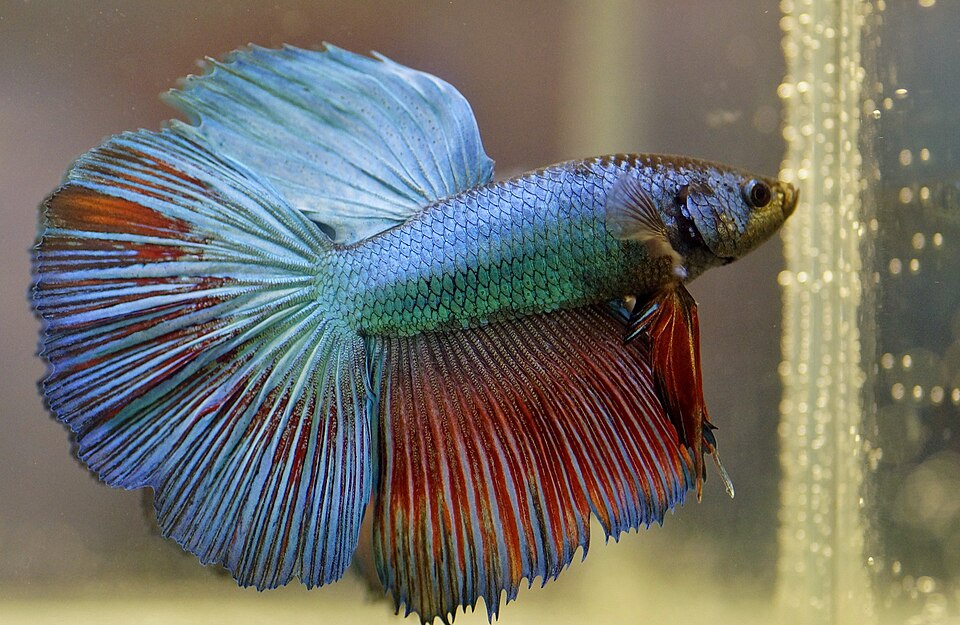
If your fish has a cloudy eye, the most likely cause is poor water quality or an injury that has become irritated or infected. Test your water for ammonia and nitrite first, do a partial water change if the numbers are off, and give the fish a calm, clean tank. Mild cloudy eye often clears over days to weeks once the cause is fixed, but one eye that is swollen, bulging, or getting worse needs closer attention.
This guide covers every common way people describe the problem: “my fish has a cloudy eye”, “my betta has one cloudy eye”, “white film over fish eye”, “cloudy eye treatment”, and “pop eye”. It applies to freshwater and saltwater fish, from bettas and goldfish to oscars, puffers and marine fish.
Most Common Causes of Cloudy Eye (In Order of Likelihood)
- Poor water quality. Ammonia, nitrite, high nitrate, or a pH swing irritate the eyes and slime coat. This is the most common cause when more than one fish is affected. See our guide to high ammonia in a fish tank.
- Physical injury. A scrape from a sharp decoration, a fight, a net, or a fish that bolted into the glass. This usually affects one eye.
- Bacterial infection. Bacteria take advantage of a damaged eye or a stressed fish. The eye may look cloudy, swollen, or have a white or red patch.
- Stress and weak immunity. Overcrowding, aggressive tank mates, wrong temperature, or a bad diet let ordinary problems turn into disease. The University of Florida’s fish health extension material lists poor water quality, crowding, temperature, handling and transport among the main stressors that make fish more likely to get sick.
- Chemical irritation. Overdosed medication, untreated tap water, cleaning products, or air-freshener sprays near the tank.
- Parasites. Some external or eye parasites can cause cloudiness, though they usually produce other signs too, such as flashing or white spots.
- Gas bubble problems. Supersaturated water can cause bubbles in or behind the eye and sometimes pop eye in both eyes.
- Age or other eye damage. Older fish can develop lasting cloudiness similar to cataracts that does not clear.
Cloudy Eye vs Pop Eye: What You’re Looking At
These are different symptoms that often show up together:
- Cloudy eye: a white, grey, or bluish haze over the eye surface. The eye is not bulging.
- Pop eye (exophthalmia): one or both eyes stick out from the head. The eye may or may not be cloudy.
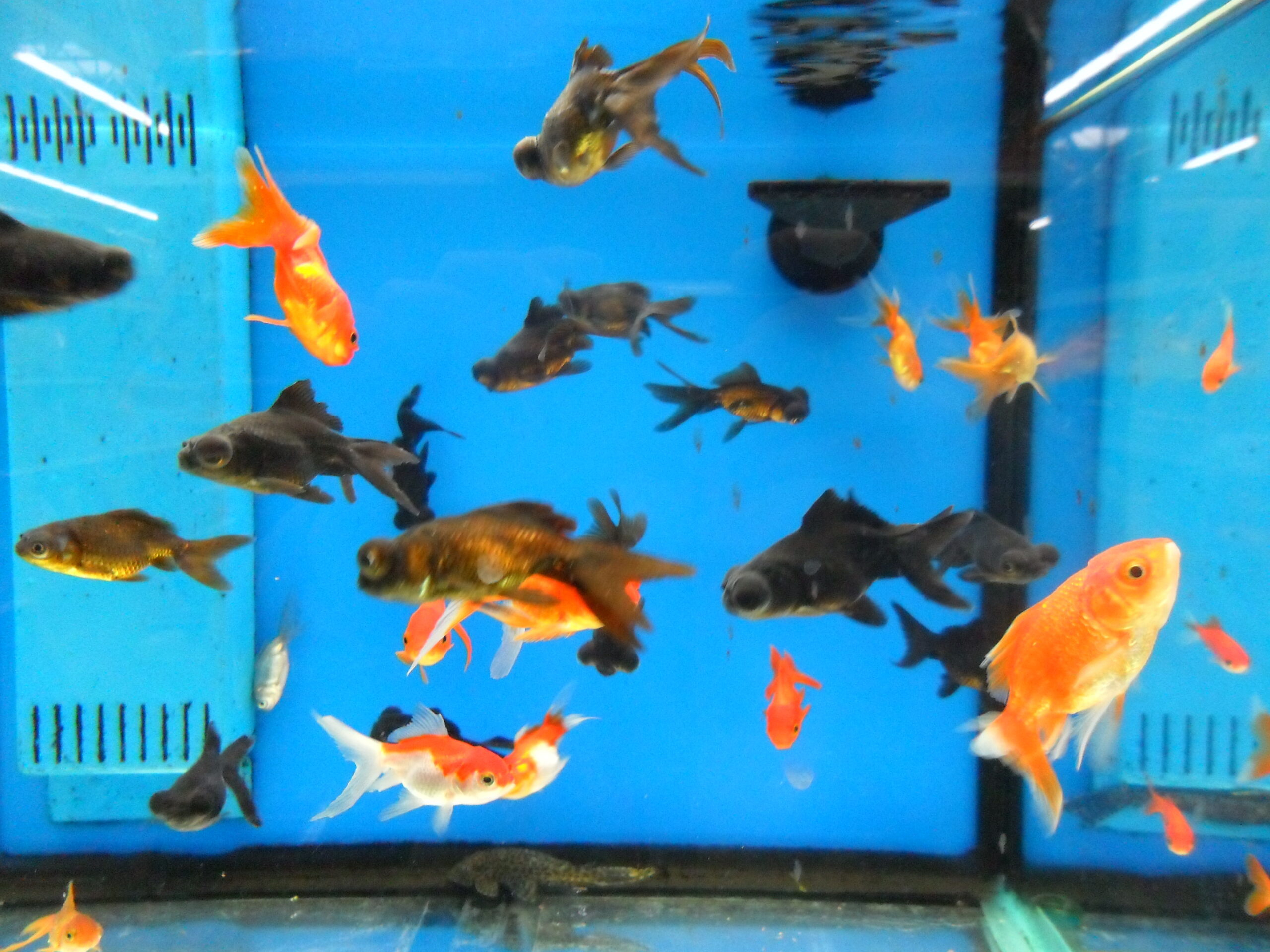
- Fancy goldfish note: some varieties, such as bubble eyes, telescopes and celestials, have naturally prominent eyes. Know what is normal for your breed.
One eye vs both eyes is your best clue. One eye affected usually points to injury or a local infection. Both eyes affected usually points to something in the water or a body-wide problem.
How to Diagnose Which Cause Applies
Work through this in order:
- Test the water today. Check ammonia, nitrite, nitrate and pH with a liquid freshwater test kit. Ammonia and nitrite should read zero. Saltwater tanks also need salinity and temperature checked.
- Check for other symptoms. Clamped fins, white spots, fuzzy patches, a swollen belly, raised scales, or red streaks all point to a bigger problem. Look at our guides to dropsy, fin rot and white spots.
- Look for an injury source. Inspect decorations with a tissue; if it snags, remove the item. Note any aggression.
- Check recent changes. New fish, new medication, a big water change, new décor, or a power outage with a temperature drop.
- Count affected fish. Several fish with the same symptom means look at the tank first, not the individual fish.
Just a heads up: some of the links in this post are affiliate links, which means I may earn a small commission if you buy through them. But no worries, it is at no extra cost to you. Also, as an Amazon Associate I earn from qualifying purchases.
Step-by-Step Fixes
Step 1: Fix the water first
Do a 25-50% water change with temperature-matched water and a water conditioner. One exception: in an older tank with very low pH, large sudden changes can shock fish, so make smaller changes more often and test pH before and after. Repeat every day or two until ammonia and nitrite read zero.
Step 2: Remove the stressor
Take out sharp décor, separate aggressive tank mates, reduce stocking, and keep the lighting and temperature steady. A calm fish heals faster.
Step 3: Consider a hospital tank
If the fish is being picked on, or you need to treat without dosing the whole tank, set up a bare hospital tank. Our quarantine tank setup guide walks through it for freshwater and saltwater fish.
Step 4: Feed well
Offer a high-quality diet and keep food fresh. If the fish will not eat, see fish not eating.
Step 5: Use medication only when the picture fits
If the eye looks infected (swollen, ragged, red, or the fish also has body symptoms), an antibacterial treatment made for aquarium fish may be needed. Read the label, remove carbon from the filter, and be careful with invertebrates and plants. Our bacterial infections guide and aquarium medication roundup explain the options. In many countries stronger antibiotics for fish require a prescription from an aquatic veterinarian.
Step 6: Be patient
Clearing is often slow. Many mild cases improve within days to a couple of weeks once the water is right, while swollen or damaged eyes can take several weeks and may leave permanent scarring or cloudiness. Do not keep switching medications; give each change time.
When It’s Serious
Get advice from an aquatic veterinarian or an experienced fish keeper quickly if:
- The eye is bulging, bleeding, or has a visible white lump or ulcer.
- The fish also has a bloated belly with raised scales (a pineconed fish).
- The fish stops eating, lies on the bottom, or breathes rapidly. See fish lying on the bottom and fish gasping at the surface.
- Several fish are affected at once, which points to the whole tank.
- There is no improvement after a couple of weeks of clean water.
I cannot diagnose your fish from a description, and this article is general guidance. An aquatic vet can examine the eye and decide on treatment.
Fish Species Notes
- Betta: Bettas with cloudy eyes are common because of small, unheated, or unfiltered tanks. Fix temperature (stable, warm) and keep ammonia at zero. See our betta care guide.
- Goldfish: Heavy waste producers; ammonia and nitrate build up fast. Frequent water changes are the main prevention.
- Cichlids and oscars: Large, messy fish prone to injury from rockwork and territorial fights.
- Puffers: Eye injuries can happen from rough décor or fighting.
- Saltwater fish: Check salinity, temperature, and the possibility of a parasite or injury; quarantine matters even more.
How to Prevent Cloudy Eye
- Cycle the tank before adding fish and test weekly. See how to cycle a fish tank.
- Do regular partial water changes (often about 25% weekly, adjusted to your stocking).
- Choose smooth décor and avoid known fin and eye nippers with delicate fish.
- Do not overstock and do not overfeed.
- Quarantine new fish.
- Keep temperature stable.
From Aquagram
Explore AquagramTest Account
Hello aquarists!
Dan GL
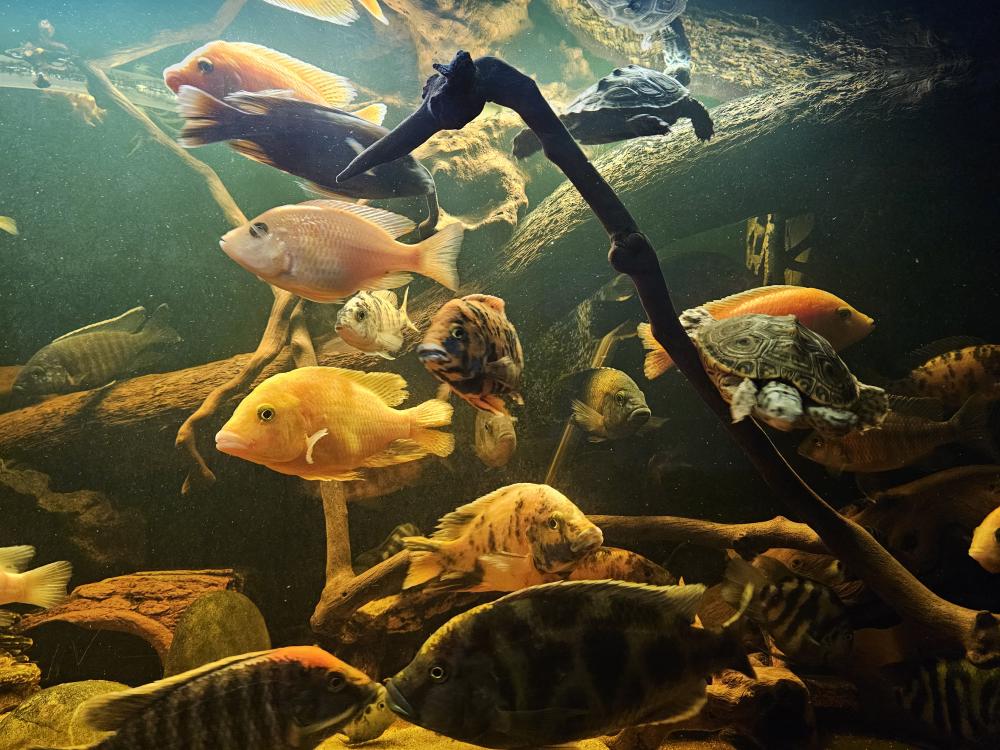
A view of my 125 gallon aquarium. Lots of fish and a few Northern Diamondback Terrapins too! 😁
SwitchTank
Incredible!
Cloudy Eye FAQ
Why is my fish’s eye cloudy?
Most often water quality or an injury. Test ammonia and nitrite first, then look for sharp décor or aggression.
Why does my betta have one cloudy eye?
One cloudy eye often points to injury or a local infection rather than the whole tank, but still test the water and check for rough décor.
Does cloudy eye in fish go away on its own?
Mild cases often improve once the cause is fixed, usually over days to weeks. Damaged eyes can stay cloudy permanently.
How do I treat a cloudy eye in fish?
Fix the water with partial changes, remove stressors, keep the fish in a calm, clean tank, and use an aquarium antibacterial only if the eye looks infected. See an aquatic vet if it’s severe.
Is cloudy eye contagious?
Not in the way a cold is, but if the cause is in the water or a bacterial outbreak, other fish can show signs too.
What is pop eye in fish and is it the same?
Pop eye means a bulging eye. It can occur with or without cloudiness. One eye is often injury or infection; both eyes more often a water or body-wide problem.
Does aquarium salt help cloudy eye?
Salt is sometimes used for mild freshwater cases but is not suitable for all fish, plants, or invertebrates. See should I use aquarium salt?.
Can fish go blind from cloudy eye?
Severe or untreated eye damage can reduce vision. Fish can often still find food by smell and movement, so a blind fish can still live well if kept in a stable tank.
Sources and Fact Check (reviewed November 18, 2026)
- University of Florida IFAS Extension, Stress: Its Role in Fish Disease: stressors such as water quality, crowding, temperature and handling that lower disease resistance.
- University of Florida IFAS Extension, Ammonia in Aquatic Systems: ammonia as a water quality hazard.
- Limitation: I could not open a veterinary eye-disease reference during research, so the cause list and the one-eye versus two-eye pattern reflect widely used aquarium and aquatic-health guidance rather than a single primary source. Treat the diagnostic clues as guides, not a diagnosis.
Disclaimer: This article is general information, not veterinary advice. For serious or persistent problems, consult an aquatic veterinarian.